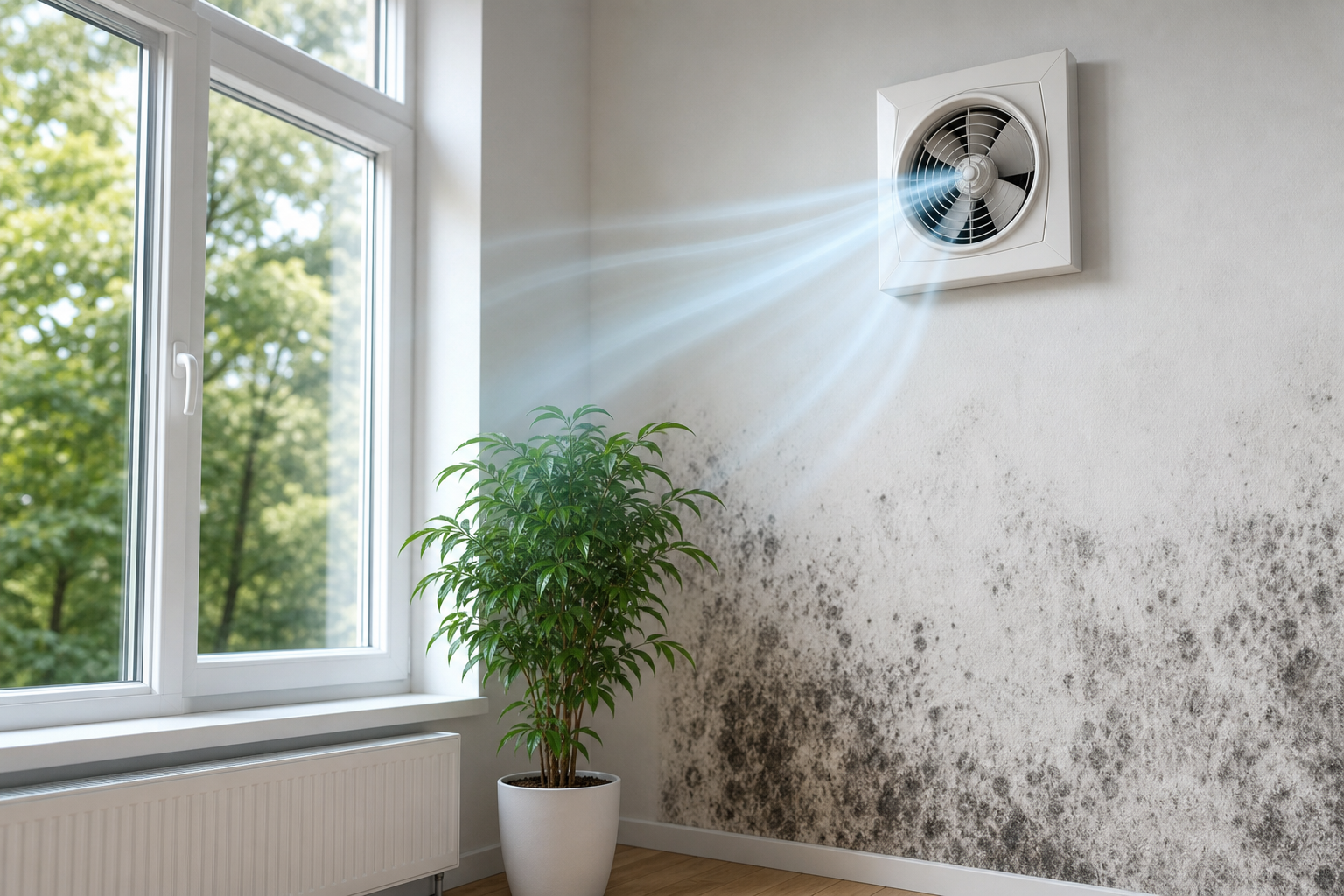
Ventilation improvement for mold means deliberately adding outdoor air, exhausting moisture-bearing indoor air, and improving air movement so relative humidity falls below levels that support fungal growth. It matters because attics, basements, bathrooms, and HVAC systems in Ontario homes can trap moisture and lead to recurring mold problems without targeted ventilation changes. If you need on-site help, ASM Mold Removal offers a free inspection and moisture assessment and provides Ontario same-day response where urgent action is required (ASM Mold Removal).
Definition and scope: what ventilation improvement for mold includes
In practice, ventilation improvement for mold covers four linked activities: bringing controlled outdoor air into the building, exhausting indoor moisture to the outside, improving air movement within rooms and cavities, and balancing forced-air systems and ducts so they do not create stagnant pockets. Short-term tactics include running exhaust fans and using portable dehumidifiers. Built-in upgrades include heat or energy recovery ventilators, mechanical exhaust systems that terminate outdoors, and correctly sized attic and soffit venting. These measures are applied where mold risk is highest: attics, basements and crawl spaces, bathrooms and kitchens, and HVAC systems.
How ventilation affects humidity and mold risk
Mold needs moisture to grow. When moisture sources such as showers, cooking, drying clothes, or roof and ground leaks combine with poor ventilation, indoor relative humidity can rise and stay elevated, creating conditions favourable to fungal colonization. Public guidance recommends reducing indoor humidity to a 30 to 60 percent range to decrease the likelihood of mold growth. Practical tactics to achieve that range include increasing ventilation, using exhaust fans, and using air conditioners or dehumidifiers as needed (U.S. EPA).
Homes that have been tightened for energy efficiency can trap moisture unless ventilation is upgraded. Health Canada explains that energy-saving retrofits that increase building tightness must be paired with adequate ventilation and exhaust for moisture-generating activities to prevent higher indoor relative humidity and mould risk (Guide to addressing moisture and mould indoors, Health Canada).
Maintaining air movement also helps dilute and disperse moisture and airborne particles. Mechanical ventilators such as ERV or HRV units can bring controlled outdoor air indoors while limiting energy penalties (CDC guidance on air circulation).
Five immediate ventilation improvements homeowners can try today
- Run and ventilate bathroom and kitchen fans — Use exhaust fans during and for 10 to 20 minutes after showering or cooking to remove moisture at the source. Ensure fans discharge outdoors and not into attics or crawl spaces (Health Canada).
- Vent clothes dryers outdoors — Confirm the dryer vent terminates outside and the duct is intact and free of kinks or lint. Indoor dryer exhaust raises humidity quickly and can feed mould growth.
- Use a portable dehumidifier in damp basements — Set a dehumidifier to hold relative humidity under 50 to 55 percent and monitor with a hygrometer. Empty and service the unit according to the manufacturer’s directions (U.S. EPA).
- Improve air movement inside the house — Run interior fans, keep supply and return vents unobstructed, and avoid blocking soffit or ridge vents. Moving air helps prevent localized moisture build-up.
- Spot-check attic vents where safe — From the access hatch, look for blocked soffit vents, compressed insulation covering vents, or signs of moisture at roof intersections. Do not enter an attic with heavy mold without a professional assessment.
Longer-term ventilation upgrades and building solutions
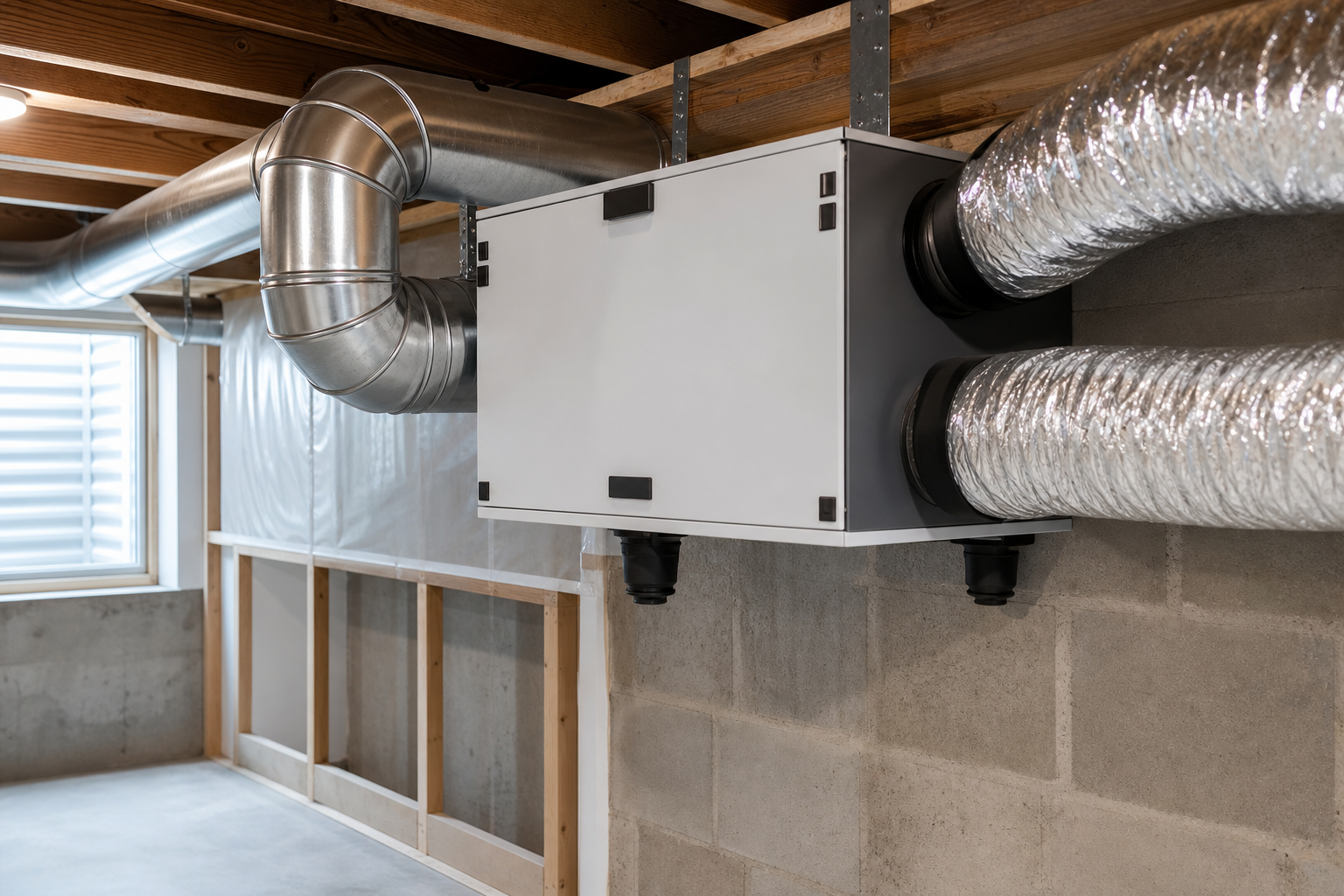
When immediate actions are insufficient or the house has chronic moisture issues, consider these more permanent upgrades and building repairs. Each option should be matched to the moisture source and the building’s construction.
- ERV or HRV installation — Energy recovery ventilators or heat recovery ventilators provide controlled fresh air exchange while recovering heat or energy. They reduce the energy cost of increased ventilation and help maintain healthy indoor humidity (CDC).
- Mechanical exhaust with proper outdoors termination — Bathrooms, kitchens, and mechanical rooms should have exhaust fans that terminate outside. Ensure ducts are insulated and sealed to avoid condensation and mold in cavities.
- Attic venting and insulation strategy — Balanced soffit, ridge, and gable vents paired with correct insulation levels reduce attic condensation risks. Air sealing around ceiling penetrations prevents warm, humid air from reaching cold roof surfaces.
- HVAC balancing and ductwork repair — Fix leaky ducts, relocate intakes away from contaminant sources, and ensure adequate returns to reduce stagnant zones and prevent HVAC systems from spreading spores.
- Whole-house or mechanical dehumidification — In very damp basements or homes, a whole-house dehumidifier integrated with the HVAC system can keep relative humidity in the recommended range year-round.
Attics
Attic ventilation must provide a continuous airflow path: cool air in through soffits, warm air out through ridges or turbines. Insulation that blocks airflow or wet insulation that retains moisture often requires removal and replacement rather than just adding fans. If insulation or framing is moldy, removal and remediation are usually necessary before new ventilation or insulation is installed (U.S. EPA brief guide).
Basements
Basements typically combine ground moisture, poor ventilation, and cooler temperatures that favour condensation. Effective solutions pair drainage and grading repairs, sealed and sloped exterior drainage, a dehumidifier sized for the space, and exhaust or controlled ventilation to exchange air with drier outdoor air during low-humidity periods.
Bathrooms and kitchens
Use fans sized to room volume, measured in cubic feet per minute or CFM, and run them long enough after use to clear moisture. Fans should exhaust outdoors, not into the attic or crawl space. Timers and humidity-controlled switches help ensure consistent use.
HVAC systems
HVAC can both mitigate and spread mold. Ensure intakes are located away from contamination sources, schedule professional duct inspection if you suspect contamination, and consider HEPA-grade filtration for areas with confirmed problems. If the system itself is contaminated, professional cleaning and containment are required to prevent redistribution of spores.
What ventilation improvement cannot do: limits and common misconceptions
Ventilation helps prevent and limit mold by lowering relative humidity and diluting airborne spores, but it will not remove mold that has already colonized porous building materials such as drywall, ceiling tiles, insulation, or wood. The U.S. EPA advises that absorbent materials with mold growth may need removal and replacement. Ventilation alone cannot clean or sterilize porous surfaces (U.S. EPA).
Ventilation also cannot stop mould if a structural water entry problem, chronic leak, or serious roof or foundation failure continues to provide moisture. In those cases, the moisture source must be repaired before ventilation improvements will prevent recurrence.
When ventilation improvements are enough and when to call a professional
Simple ventilation fixes are often enough for occasional, minor moisture rises: run fans, add a dehumidifier, and seal obvious leaks. Call a professional for inspection and remediation when any of these red flags appear:
- Visible mold on porous building materials or widespread staining and a persistent musty odour.
- Mold in attics, crawl spaces, or inside HVAC ductwork where insulation or structural components are affected.
- A recent flooding or significant water event, or ongoing water entry that cannot be controlled by homeowner repairs.
- Recurring mold after DIY fixes or when documentation and clearance are needed for a sale.
ASM Mold Removal offers Ontario-wide, same-day response for urgent issues, free inspections and moisture assessments, professional remediation with HEPA filtration and containment, and a Mold Remediation Warranty Certificate after completion and inspection. For cases that require removal of contaminated materials, professional containment and HEPA-filtered cleanup protect occupants and prevent cross-contamination (ASM Mold Removal).
A concise decision checklist and priority criteria for homeowners

- Measure: if indoor relative humidity is consistently above 60 percent, prioritize dehumidification and ventilation upgrades (U.S. EPA).
- Inspect: visible mould on porous materials or a persistent musty smell requires professional assessment.
- Act: stop ongoing water entry first, such as roof, plumbing, or grading issues, then add ventilation and drying measures.
- Document: if you need clearance for a real estate transaction, request a formal inspection, moisture assessment, and post-remediation warranty or clearance documentation from a remediation contractor (ASM Mold Removal).
Monitoring and follow-up: tools, targets, and when to re-test
Use a quality hygrometer to track indoor relative humidity and aim for 30 to 60 percent as a general target. After changes or remediation, re-check the problem area weekly for the first month and monthly for the following three months. If documentation is required for health, sale, or lease purposes, arrange air or surface testing and a clearance inspection from a professional remediation company. A remediation contractor can provide a Mold Remediation Warranty Certificate to document that active mold was addressed and inspected (ASM Mold Removal).
Frequently asked questions
Can ventilation alone remove existing attic mold?
No. Ventilation can reduce humidity and slow regrowth, but if mold has colonized porous materials such as insulation, drywall, or wood framing, those materials often require removal and replacement. Ventilation alone will not fully remediate colonized absorbent surfaces (U.S. EPA).
What humidity level should I aim for to prevent mold indoors?
Aim for 30 to 60 percent relative humidity. Keeping relative humidity in that range reduces the likelihood of mold growth. Use dehumidifiers, air conditioning, and exhaust ventilation to achieve and maintain that level (U.S. EPA).
When should I call a mold remediation professional instead of trying ventilation fixes myself?
Call a professional when you find visible mold on porous building materials, suspect HVAC contamination, experience recurring mold after DIY fixes, face a recent flood or major leak, or need official documentation and clearance for a real estate transaction. Professionals provide containment, HEPA filtration, repair, and warranty documentation (ASM Mold Removal).
Will improving ventilation dramatically increase my energy bills?
Not necessarily. Mechanical ventilation that brings outdoor air in will affect energy use, but energy recovery ventilators or properly controlled systems can reduce the energy penalty by transferring heat or humidity between incoming and outgoing air. Balancing ventilation with insulation and targeted dehumidification limits unnecessary energy waste (CDC).
How soon should I retest or recheck a problem area after making ventilation improvements?
Re-check weekly for the first month, then monthly for three months. If a problem persists or returns, schedule a professional inspection and consider air or surface testing for documentation and clearance (U.S. EPA).
If you need a professional inspection, moisture assessment, or rapid remediation in Ontario, contact ASM Mold Removal for a free inspection and same-day response where available — ASM Mold Removal.


