A persistent musty or moldy smell is often the first sign of hidden mold. This article gives a concise six-step decision checklist you can follow now, practical room-by-room diagnosis steps, objective thresholds for DIY versus professional remediation, and what to expect from a same-day inspection and warranty-backed service in Ontario.
Quick 6-step decision checklist
- Rate the smell: Note whether the odor is mild, moderate, or strong. Inspect each room and record where the smell is strongest; the CDC/NIOSH assessment tools advise recording odor subjectively as part of the initial evaluation (CDC/NIOSH report).
- Map the location: Walk the property and create a simple floor plan or list showing rooms and odor intensity. Local inspection workflows recommend room-by-room mapping to find hidden sources (musty smell in house).
- Measure moisture: Use a hygrometer or moisture meter to check relative humidity and suspect surfaces. High localized moisture points strongly suggest active mold growth; extension checklists include moisture checks for plumbing, roofs, HVAC and crawlspaces (NC State Extension).
- Identify material type and size: Can the affected area be cleaned on non-porous surfaces, or does the smell come from porous materials like insulation, drywall, or attic insulation? Many sources use a 10 square foot rule of thumb: small surface-only problems on non-porous materials may be DIY, while larger or porous infestations need professionals (mold in apartment).
- Apply the DIY triggers: Consider a careful DIY clean only if the smell is mild, the affected area is small, only non-porous surfaces are involved, the water source is recent and fixed, and no one vulnerable lives in the home. Follow safe-cleaning guidance and document everything (Mold Guides checklist).
- Escalate when necessary: Call a remediation professional if the odor is moderate or strong, the source is hidden or persistent after drying, porous materials are contaminated, the area exceeds 10 square feet, occupants are immunocompromised, or you need documentation for a landlord or a real-estate transaction (EPA remediation checklist).
Why a musty or moldy smell matters
A "moldy" smell is usually caused by microbial volatile organic compounds, or mVOCs, produced by active microbial growth. The U.S. EPA explains that these compounds commonly create the musty smell people notice before they see visible mold, so odor is an important early indicator when you cannot immediately find visible growth (EPA: What does mold smell like?).
Because odors can come from hidden cavities, attic insulation, HVAC systems, or building materials, a persistent smell often means moisture is present behind the surface and further investigation is required. The EPA remediation checklist and the CDC dampness assessment tools both include odor detection as a routine part of the initial assessment (EPA checklist, CDC/NIOSH guidance).
Room-by-room diagnosis: how to trace the smell
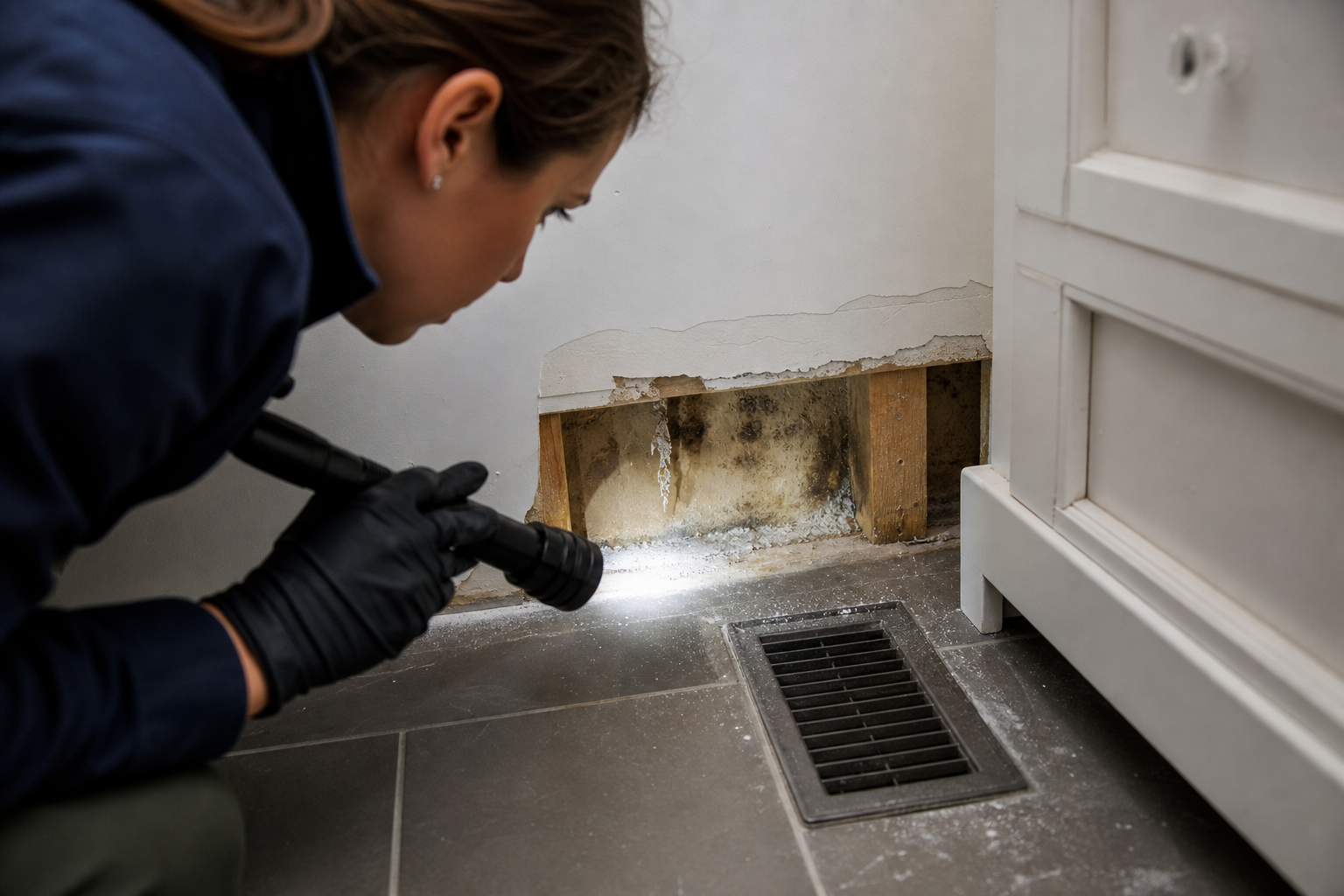
Follow a structured inspection sequence to trace the smell rather than guessing. Use these practical steps:
- Do an odor sweep: Walk slowly through each room, doors closed, and note where the smell is strongest. Mark your plan or take a photo with notes.
- Isolate likely sources: Check plumbing fixtures, under sinks, behind appliances, basements, crawl spaces, attics, and along rooflines. University extension checklists recommend plumbing, windows, roofs and crawlspaces as common moisture sources (NC State Extension).
- Check HVAC: Smells that intensify when the system runs often point to the ductwork or drip pans. HVAC inspection is a common next step in odor investigations (musty smell in house).
- Try a 48-hour item removal test: For suspected localized sources such as boxes or furniture, remove the items outdoors for 48 hours to see whether the smell diminishes. MoldInspection.ca suggests this practical test as part of a diagnostic flow.
- Measure and document: Record hygrometer readings, take dated photos, and log where and when the smell is strongest. Good documentation speeds decision making for tenants, owners and contractors.
DIY versus professional: objective decision criteria
Use these evidence-based thresholds when deciding whether to DIY or call a professional:
- Acceptable for careful DIY: Mild odor, visible mold limited to a small area on non-porous surfaces, recent moisture that has been or can be fully dried, no signs of structural contamination, and no vulnerable occupants. Follow recommended PPE and cleaning methods (Mold Guides checklist).
- Call a professional when: The odor persists after drying, the source is hidden (inside walls, attic insulation, HVAC, or crawlspaces), porous materials (insulation, drywall, carpeting) are contaminated, the affected area is larger than 10 square feet, occupants are immunocompromised, or you require a formal remediation report and clearance for tenancy or sale (mold in apartment, EPA checklist).
What to expect from a professional inspection and same-day service
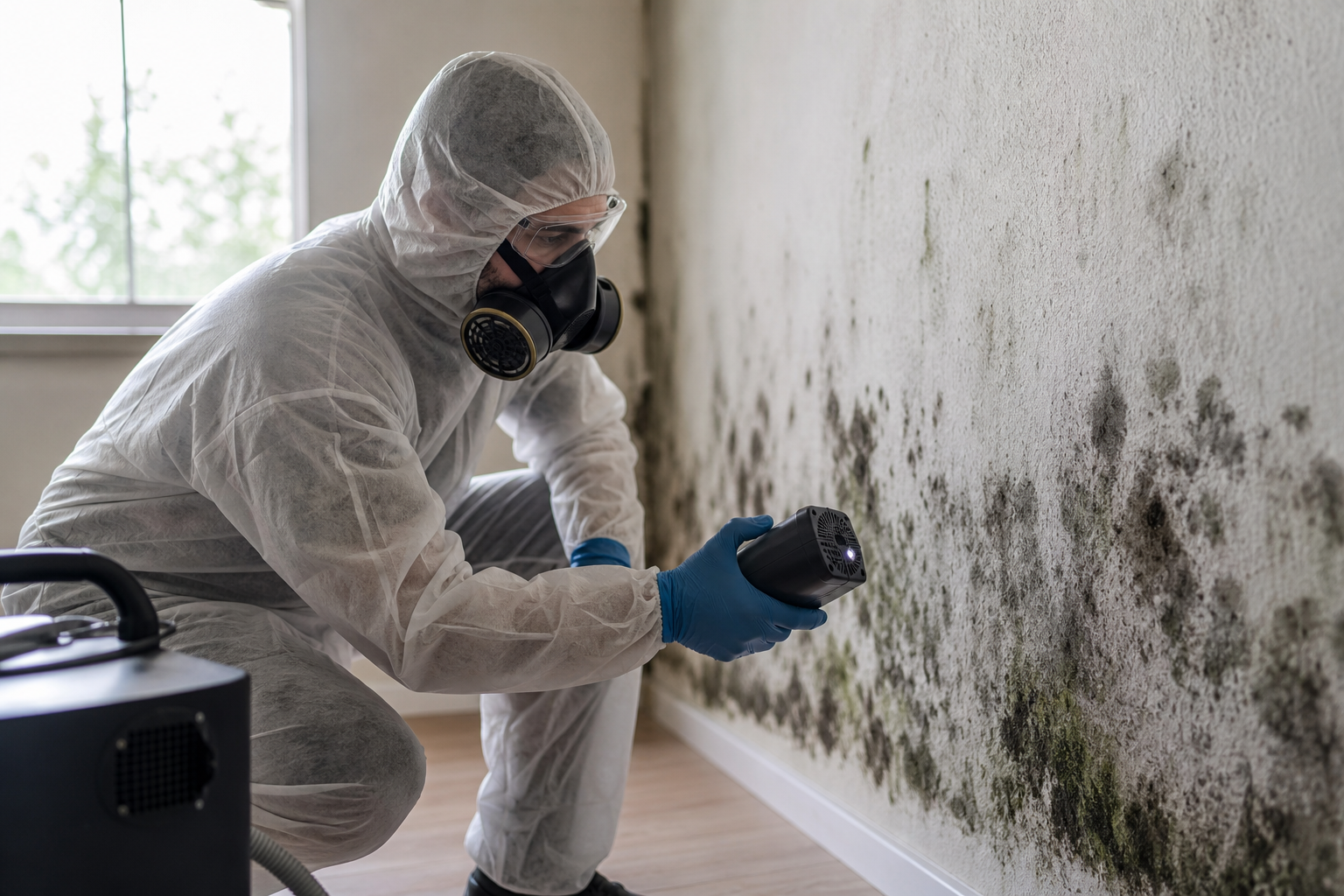
A professional inspection typically includes a visual assessment, moisture mapping with meters, targeted use of thermal imaging if concealed moisture is suspected, and air or surface testing when indicated. Remediation professionals use containment and HEPA filtration to limit cross-contamination and remove contaminated materials, then apply antimicrobial or prevention treatments as appropriate. The EPA checklist outlines these planning and containment steps for larger or hidden problems (EPA checklist), and the CDC dampness tools include odor and moisture assessment guidance (CDC/NIOSH).
Local Ontario providers like ASM Mold Removal Inc. offer same-day response for urgent issues, free inspections with moisture assessment and testing, HEPA filtration and containment, eco-friendly EPA-approved treatments, and a Mold Remediation Warranty Certificate on completion when required for real-estate transactions or tenant assurances (Asmmoldremoval).
How to choose and vet a remediation contractor in Ontario

Ask these specific questions before you hire:
- Do you carry liability and workers' compensation insurance and can you show proof?
- Do you use HEPA filtration and contain the work area to prevent spread?
- Will you perform moisture mapping and, if needed, thermal imaging or air testing?
- Do you provide a written scope, an itemized estimate, and a Mold Remediation Warranty Certificate after completion?
- Can you respond same-day for urgent leaks or persistent odors?
- Can you provide references or before-and-after documentation from similar jobs?
Transparent, itemized pricing and a written scope reduce the chance of surprise costs. Customer feedback on local firms highlights fast, professional work as a common strength while one review noted that final charges can be higher than onsite quotes, underscoring the value of confirming extra-cost scenarios up front (Asmmoldremoval).
Immediate containment actions you can take safely
While you arrange a decision or a professional inspection, take these short-term steps:
- Ventilate if outdoor conditions are dry and ventilating will not pull in outdoor moisture or smoke.
- Isolate the room: close doors and HVAC vents serving the area if possible to limit spread.
- Stop any ongoing water entry and dry wet materials quickly with fans and dehumidifiers.
- Avoid foggers, ozone machines, or painting over odours before remediation; these do not remove the source and may make the problem worse.
- Use basic PPE for minor DIY cleaning: N95 or better respirator, gloves, and eye protection, and document the work with photos and notes.
The EPA checklist and CDC dampness tools warn against actions that mask odor without addressing moisture or contamination; containment and source removal are core remediation steps (EPA checklist, CDC/NIOSH).
Documentation, tenant steps, and real-estate clearance
If you are a tenant, buyer, seller or agent, document the problem thoroughly: dated photos, written notes of when the odor was first noticed, hygrometer readings, and written requests to landlords or property managers. Canadian tenant guidance recommends written notification and a request for inspection; keep copies for dispute resolution (mold in apartment).
For transactions, request a formal remediation report and a Mold Remediation Warranty Certificate from the contractor to confirm work was completed to a stated standard and to provide post-remediation assurance (Asmmoldremoval).
Frequently asked questions
How urgent is a persistent musty or moldy smell in my home?
A persistent smell is a sign of possible hidden moisture and active microbial growth. Treat it as moderate urgency: start a room-by-room diagnosis immediately and escalate to a professional if the odor persists, affects porous materials, or occupants are vulnerable. The EPA and CDC recommend using odor as part of the initial assessment (EPA, CDC/NIOSH).
Can I remove a moldy smell with household cleaners and ventilation?
Ventilation and cleaning can help when the problem is small, recent, and on non-porous surfaces. However, if the odor returns, comes from insulation or HVAC, or follows water intrusion, ventilation and cleaners will not fix hidden contamination. Follow the DIY criteria above and document your work (Mold Guides).
When should attic mold odor removal be handled by a professional?
Attic odors often point to contaminated insulation, roof leaks, or framing mold. Call a professional when the smell is moderate or strong, when insulation or framing is affected, or when you need documentation for a sale. Professional remediation commonly includes insulation removal, HEPA containment and a post-job warranty (Asmmoldremoval).
What should a professional remediation report and warranty include?
Expect a written scope of work, photos of affected areas, moisture readings, details of containment and equipment used (for example HEPA filtration), a summary of removed or replaced materials, and a Mold Remediation Warranty Certificate describing what the warranty covers (Asmmoldremoval).
Will professional mold remediation remove the smell immediately?
Removing the source and contaminated materials usually leads to a rapid reduction in odor, but lingering mVOCs in porous finishes can take time to dissipate. Proper containment, removal and follow-up drying speeds full odor removal (EPA checklist).
Asmmoldremoval offers Ontario same-day inspections, moisture assessment, HEPA filtration containment and a Mold Remediation Warranty Certificate for documented jobs. Call or request a free inspection if your checklist reaches professional thresholds or if the odor is persistent.


