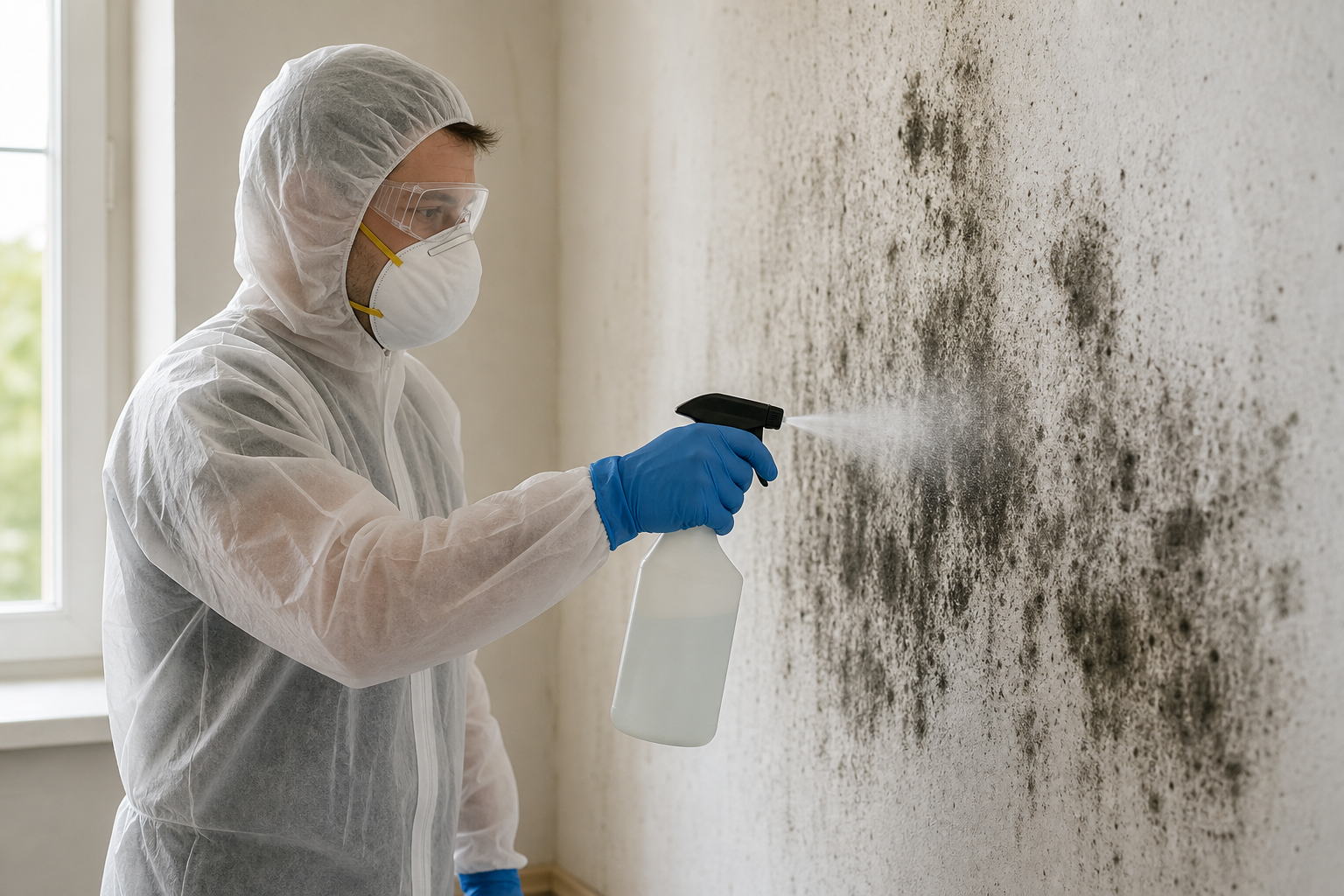
Preventative mold treatment is a targeted application of registered products to surfaces that show no visible mould, with the goal of slowing or preventing future growth when moisture risk exists. This article defines the term clearly, explains how it differs from active remediation, summarises safety and regulatory context, and gives practical rules for Ontario homeowners deciding whether a DIY product or a certified contractor is the right choice.
What preventative mold treatment means
At its core, preventative mold treatment refers to applying an antimicrobial or mould and mildew preventative product to clean, dry surfaces where no visible mould is present, but where there is increased risk because of prior moisture, recent repairs, or planned changes like new insulation. The United States Environmental Protection Agency describes registered products for this purpose on its product label, which explains allowed uses and applicator safety precautions. See the EPA product label for specific directions and restrictions: EPA mold and mildew preventative treatment label.
How preventative treatment differs from active remediation
Understanding the distinction prevents improper use and unnecessary expense. Active remediation is the process used to remove or contain visible mould growth and contaminated materials, and it typically includes removal of porous materials, containment, HEPA filtration, and disposal of waste. Preventative mold treatment, by contrast, is not a removal protocol. It is a preventive measure applied only where visible growth is absent, and only after the source of moisture has been addressed.
Canadian federal guidance emphasises that controlling moisture is the primary prevention strategy, and that treatment or removal decisions depend on whether mould is visible and on the underlying moisture source. Where mould is visible, remediation steps and drying are required, not only a surface spray. For Canadian context and public health recommendations, consult the Canada.ca guidance on addressing moisture and mould.
When preventative mold treatment may be appropriate
Use the checklist below as a practical decision tool. Each item is a signal that a preventative application could be helpful, provided there is no visible mould and the area is dry.
- No visible mould, but a recent leak or roof repair left surfaces at risk because they will be exposed to higher humidity.
- Attic or crawl space where wet insulation was removed, and the framing and sheathing are now clean and dry before new insulation is installed.
- Renovation or remediation work has corrected the moisture cause, and a preventative product is being applied to reduce recolonisation while materials stabilise.
- HVAC repairs that cleared a condensation problem, where a targeted preventative application inside accessible ducts is part of a corrective plan.
- Pre-construction or pre-occupancy treatment for an area that historically had mould, and long-term moisture control measures are in place.
Do not use preventative products when any of the following apply. These are red flags that require remediation rather than preventive spraying.
- Visible mould growth on materials, especially porous materials like insulation, drywall, or carpeting.
- Ongoing moisture problems or active leaks that have not been fixed.
- Occupants who are severely immunocompromised, unless a qualified clinician and remediation specialist advise otherwise.
- Large contaminated areas where disturbance during application could spread spores without proper containment and HEPA filtration.
Safety, labelling, and regulatory context
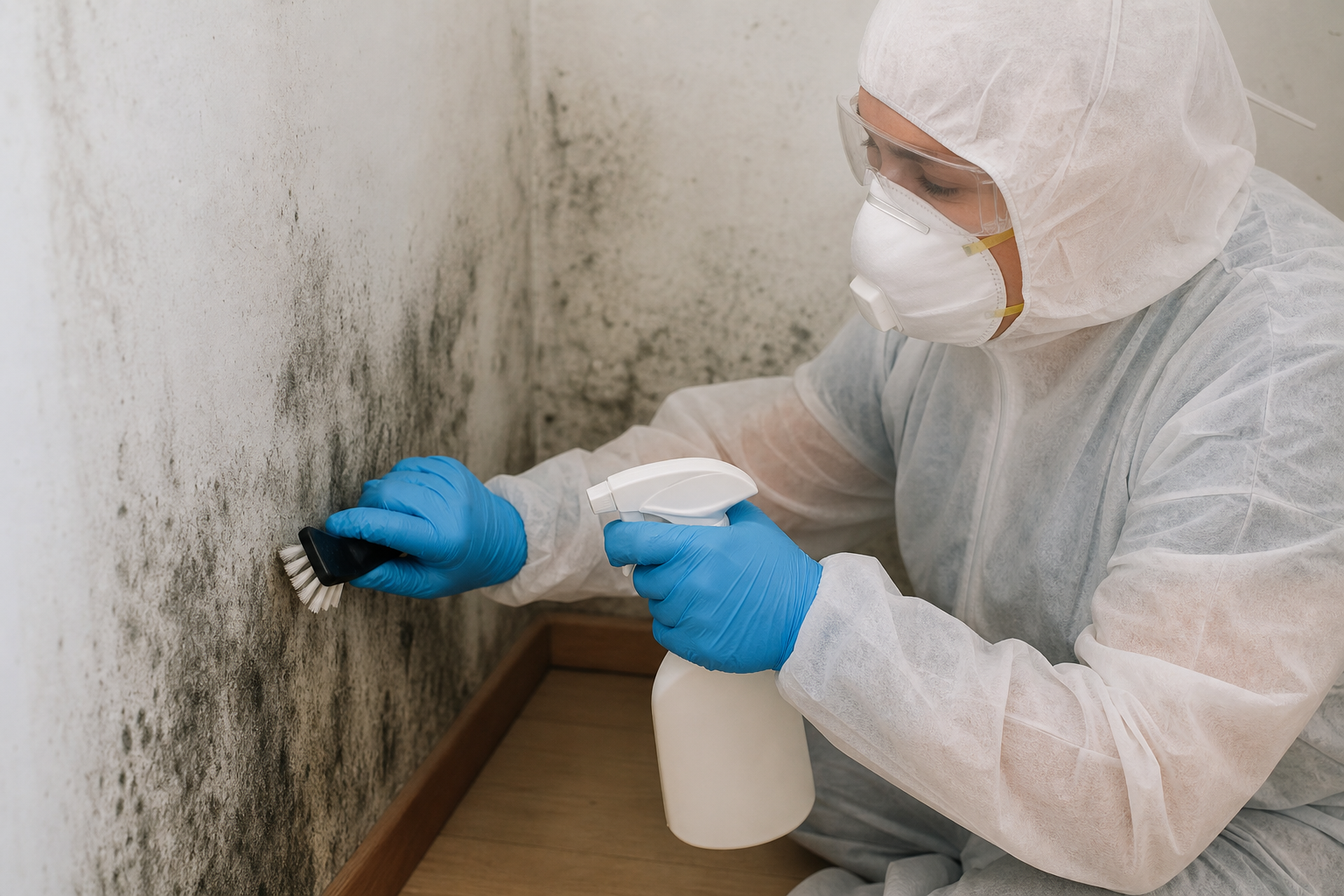
Preventative products are regulated and must be used according to label directions. The EPA product label for mould and mildew preventative treatments describes use as a preventive application, lists allowable surface types and maximum coverage, and specifies applicator safety precautions. Read and follow the product label exactly, because label instructions are the legal requirements for use in jurisdictions where the product is registered.
In Canada, federal resources consistently place moisture control first as the durable prevention method, and they caution homeowners to prioritise drying and building repairs over surface-only solutions. For practical public health advice and prevention basics refer to the Canada.ca guide on addressing moisture and mould. Municipal guidance for large cities also reinforces the same message about humidity control, prompt drying after leaks, and fixing building defects rather than relying solely on surface treatments.
Practical implications for homeowners
Because labels and public guidance vary, homeowners should not assume a product labelled for preventative use is safe for every situation or that it replaces repair work. Follow the product label, ventilate during application, and consider professional application when containment or HEPA filtration is required to avoid disturbing settled spores.
What a professional preventative application looks like
A certified remediation contractor treats preventative work as one step in a moisture-control plan. The professional workflow commonly includes these elements, which also describe services offered by experienced providers.
- Inspection and moisture assessment, including identifying the past moisture source, measuring relative humidity, and documenting conditions before treatment.
- Confirming that surfaces are clean and fully dry. Preventative products are not applied to visibly contaminated or damp substrates.
- Targeted application of an EPA-approved preventative product where appropriate, following the product label for dilution, dwell time, and safe use.
- Containment and HEPA filtration when work could disturb dust or deposits that contain spores, to protect occupied spaces and prevent cross contamination.
- Post-application recommendations for ventilation, insulation installation, or dehumidification to reduce the long-term moisture risk.
- Documentation, including photographs, a written report, and where available, a remediation warranty or certificate as proof of work completed.
Ontario homeowners who want same-day response, a free inspection, and a moisture assessment can ask whether a contractor offers those services before scheduling work. For example ASM Mold Removal provides Ontario-wide same-day response, free detailed inspections with moisture assessment, and uses HEPA filtration, containment, and EPA-approved products as part of its remediation and prevention services. For many homeowners the availability of documentation such as a Mold Remediation Warranty Certificate is an important decision factor when selecting a contractor.
How preventative treatment fits into a long-term moisture control plan
Preventative treatment is one layer. Lasting protection comes from durable fixes and ongoing monitoring. Typical long-term actions include repairing roof or plumbing leaks, improving attic ventilation, replacing wet insulation correctly, correcting HVAC condensation problems, and installing dehumidification where humidity is persistently high.
Follow-up inspections after repairs are prudent, because residual moisture pockets and hidden wet materials can allow mould to regrow. A preventative application can reduce early recolonisation while materials stabilise, but it does not replace ongoing moisture control.
Decision criteria: DIY application versus hiring a professional
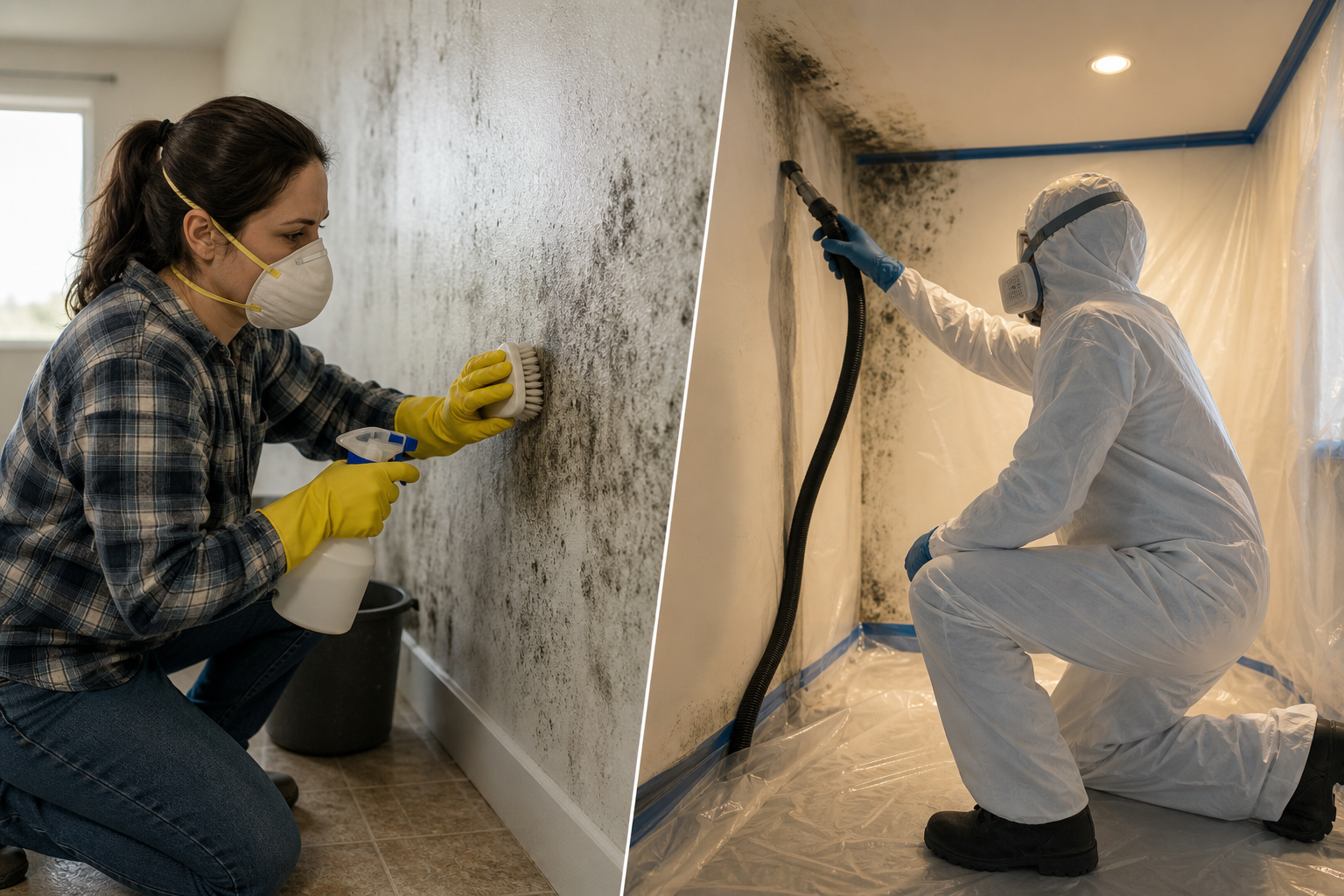
Use these criteria to decide whether a safe DIY preventative product is reasonable or whether you should hire a certified remediation company.
- Area size and accessibility: small, well ventilated spaces with clean, dry surfaces may be suitable for consumer preventative products used per label. Larger or hard to access areas usually need professionals.
- Moisture history: if there was a single, brief wetting event that is fully dried, a preventative application may be reasonable. Persistent or repeated moisture requires a professional assessment.
- Occupant health: if household members have asthma, allergies, or immune suppression, hire a professional to reduce exposure and to document the work.
- Risk of disturbance: any action that will disturb insulation, drywall, or dust may spread spores and calls for containment and HEPA filtration by trained technicians.
- Need for documentation: for real estate transactions and insurance purposes, a certified contractor can provide written reports and a Mold Remediation Warranty Certificate, which DIY work cannot deliver.
Real objections and straightforward answers
- Is it safe in an occupied home? When label instructions are followed and ventilation is provided, many preventative products can be used safely in occupied homes, but professional application reduces exposure risk and can include containment and HEPA filtration.
- Will it stop mould from returning? No product guarantees permanent prevention. The durable safeguard is moisture control through repairs and ventilation improvements.
- Can it replace repairs? No. Preventative treatment is not a substitute for fixing leaks or removing contaminated materials.
- Is the product risk free? Registered products are tested for intended uses, but they still require label compliance and safe handling. Read the EPA product label for applicator safety information.
Quick checklist for Ontario homeowners and next steps
- Stop the moisture source and begin drying immediately.
- Photograph the area and record dates and the cause of wetting for documentation.
- Measure and verify surfaces are dry before considering any preventative product.
- Arrange a free inspection and moisture assessment with a certified contractor when in doubt, especially for attics and crawl spaces.
- Only apply preventative treatment where no visible mould is present, and follow the product label.
- Require containment and HEPA filtration during work that could disturb dust and deposits.
- Ask the contractor for a written report and recommendations for ventilation or insulation improvements.
- If work is performed, request a Mold Remediation Warranty Certificate or equivalent documentation for your records.
Frequently asked questions
Is preventative mold treatment safe to use in an occupied home?
When applied according to the product label, many preventative products can be used safely in occupied homes. Consider professional application if the area is dusty, hard to access, or if occupants have respiratory conditions, because a contractor can use containment and HEPA filtration to reduce exposure.
How do I know whether to use a preventative treatment or call for full mould remediation?
If you see visible mould, smell persistent musty odours, or have ongoing moisture, call a remediation specialist. Use preventative treatment only when surfaces are clean, fully dry, and the moisture cause has been fixed.
Will preventative mold treatment stop mould from returning permanently?
No. Preventative treatment reduces short term recolonisation risk but does not replace moisture control. Long term prevention depends on repairs, ventilation, and moisture monitoring.
Do I need clearance testing after a preventative treatment?
Clearance testing is not normally required after a small preventative application. For larger or high risk projects, or when documentation is needed for a sale, request post-work inspection or testing from the contractor.
Can I apply preventative mold products myself or should I hire a certified company?
Small, non sensitive areas that are dry and accessible may be treated by a homeowner following label directions. Hire a certified company if the area is large, the work could disturb settled spores, occupants are vulnerable, or you need official documentation and a warranty.
For more information or to arrange an inspection, contact ASM Mold Removal for Ontario-wide, same-day response, a free inspection and moisture assessment, and professional preventative and remediation services.


