Last updated: October 2026
Mould detection is a practical way to describe the process of checking for indoor mould and the moisture conditions that allow it to grow. A useful assessment does more than identify a dark mark: it examines the surrounding building, traces leaks or condensation, checks damp materials, and explains what should happen next.
ASM Mold Removal Inc. serves residential and commercial properties across Ontario from Scarborough. The company provides same-day response for urgent issues, beginning with a free inspection and moisture assessment and, when required, continuing with containment, HEPA filtration, remediation, and repair or restoration.
What does mould detection include?
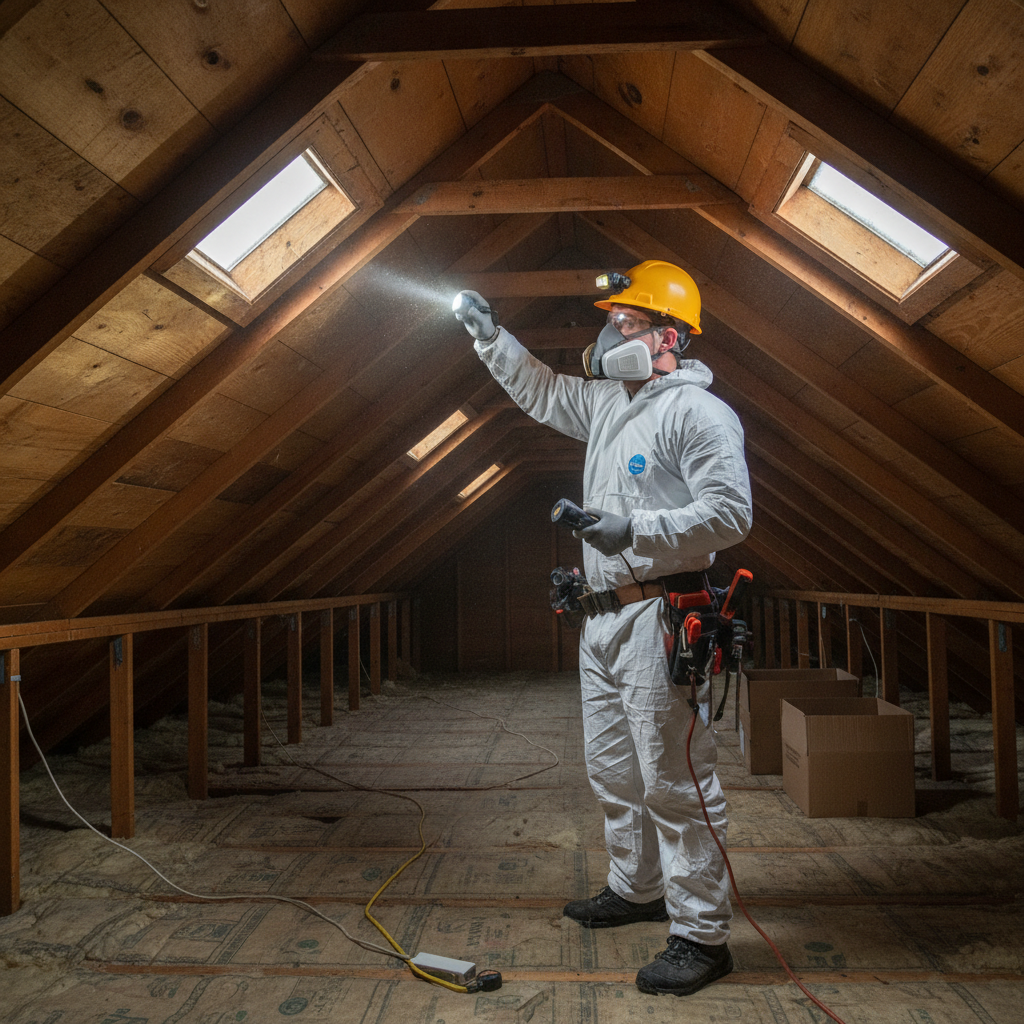
A professional mould assessment normally combines a building walkthrough with moisture investigation. The inspector considers visible growth, musty odours, staining, water damage, ventilation, indoor humidity, and areas where mould could be concealed behind finishes or above ceilings.
Health Canada notes that mould can be hidden behind walls or above ceiling tiles, particularly where water damage has occurred. Its guidance recommends checking rooms as well as attics, basements, crawl spaces, and storage areas when moisture or mould is suspected. You can review the Canadian guidance on addressing moisture and mould indoors for homeowner-oriented background.
- Visual inspection: identifies growth, staining, damaged finishes, condensation, and conditions that support mould.
- Moisture investigation: uses moisture meters and humidity readings to locate wet materials and likely sources.
- Thermal imaging: can highlight temperature patterns that justify closer examination, although a thermal image alone does not prove mould.
- Targeted investigation: may include limited access to a cavity when non-invasive findings indicate hidden damage.
- Sampling when justified: air or surface samples may answer a specific unresolved question, but they are not an automatic part of every visit.
The objective is not simply to give a mould type a name. It is to determine whether mould is present, where it is located, what caused the moisture, what materials are affected, and how to prevent recurrence.
What warning signs should prompt an inspection?
Book an assessment when you notice a persistent musty odour, recurring condensation, water staining, peeling or bubbling paint, swollen trim, damp drywall, or visible growth that returns after cleaning. A recent roof, plumbing, foundation, or HVAC leak also warrants attention if materials may have remained wet.
Some warning signs are seasonal. Winter condensation and frost at attic nail tips may indicate warm, moist air reaching a cold roof assembly. Spring rainfall and snowmelt can expose drainage or foundation problems, while summer humidity can keep basement walls, closets, and crawl spaces damp.
Areas that deserve closer attention
- Attics: inspect roof sheathing, insulation, soffit intake, roof exhaust, and bathroom fan ducts. A fan exhausting into the attic can add moisture repeatedly.
- Basements and crawl spaces: check cove joints, foundation walls, stored materials, sill plates, and finished walls near the slab.
- Bathrooms and kitchens: look behind cabinets, around plumbing penetrations, beneath sinks, and near failed caulking or grout.
- HVAC areas: examine coils, drain pans, insulation, ceiling plenums, and locations where odours or dust are stronger near diffusers.
In Toronto and Scarborough homes, an assessment should connect indoor observations with exterior conditions such as downspout discharge, grading, roof penetrations, and window or door leakage. The same approach applies in other Ontario communities, including Brampton, where basement seepage and finished-wall damage can be difficult to see without moisture mapping.
How does a mould inspection work?
A good inspection follows a repeatable sequence rather than relying on a single instrument. The steps below help distinguish visible mould from staining, locate moisture, and decide whether further investigation is worthwhile.
- Discuss the history: record leaks, flooding, renovations, odours, condensation, occupant concerns, and previous cleanup.
- Walk through the property: inspect living areas and less visible zones, including attics, basements, crawl spaces, storage areas, bathrooms, and mechanical rooms.
- Review exterior moisture pathways: consider roof drainage, downspouts, grading, penetrations, and locations where water may enter.
- Measure moisture and humidity: compare readings across materials and rooms rather than treating one reading as conclusive.
- Use thermal imaging selectively: investigate unusual temperature patterns alongside meter readings and building history.
- Assess hidden areas: recommend limited access or additional investigation only where the available evidence supports it.
- Explain the action plan: identify the source, affected materials, containment needs, remediation priorities, and prevention work.
Documentation should include photographs, locations, relevant readings, observed damage, and practical recommendations. For a workplace or commercial building, the report should also identify who will oversee investigation and remediation so that responsibilities and potential conflicts are clear.
Which mould detection methods are useful?
The most useful method depends on the question being answered. Visual inspection and moisture investigation often provide more actionable information than a standalone sample because remediation must address the dampness that allowed growth to establish.
| Method | What it can show | Best use | Important limitation |
|---|---|---|---|
| Visual inspection | Visible growth, staining, damaged finishes, condensation, and building conditions | First step in almost every assessment | Cannot confirm what is hidden without further investigation |
| Moisture meter | Relative or comparative moisture in selected materials | Tracing wet drywall, framing, sheathing, and other materials | Readings depend on material, instrument, and location |
| Thermal camera | Temperature patterns that may indicate moisture or air leakage | Prioritising areas for closer inspection | Does not identify mould or prove that a wall is wet by itself |
| Surface sample | Material collected from a specific location for laboratory analysis | Ambiguous material or documentation questions | Represents the sampled spot, not the whole building |
| Air sample | Airborne particles captured at a particular time and location | Selected unresolved or documentation questions | Usually does not identify the cause or predict health effects |
Thermal imaging is therefore a supporting tool, not a mould detector in isolation. An apparent cold area may result from insulation, air leakage, framing, or moisture; it needs to be checked against physical readings and the building history.
When does air testing help?
Routine air testing is usually not the best first step. Health Canada’s residential mould guideline says that, in most situations, air testing is not recommended because an air result does not provide information that can predict health effects and often provides little information about the cause of mould damage.
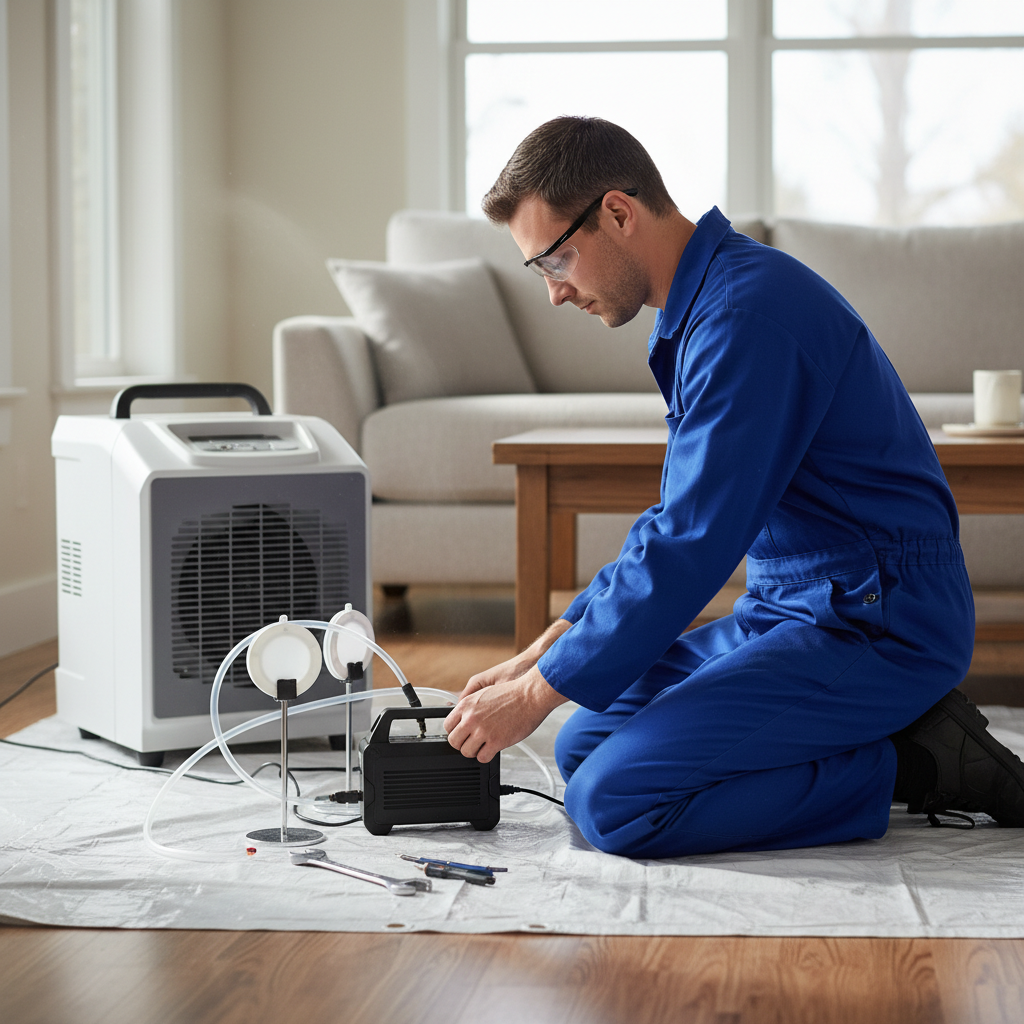
Air testing can sometimes be considered when concerns remain unexplained after a thorough inspection, especially after flooding, roof leaks, or plumbing leaks that may have affected wall cavities. The decision should be tied to a specific question, such as whether additional hidden contamination needs investigation or whether documentation is required for a defined project stage.
Testing should not delay source control. If visible mould is extensive and the moisture cause is clear, the priority is to correct the water problem, establish appropriate containment, remove affected materials safely, dry the area, and verify the work. The Health Canada mould guideline explains why inspection, source reduction, ventilation, and moisture control are generally more useful than relying on airborne concentration results.
When surface sampling may be reasonable
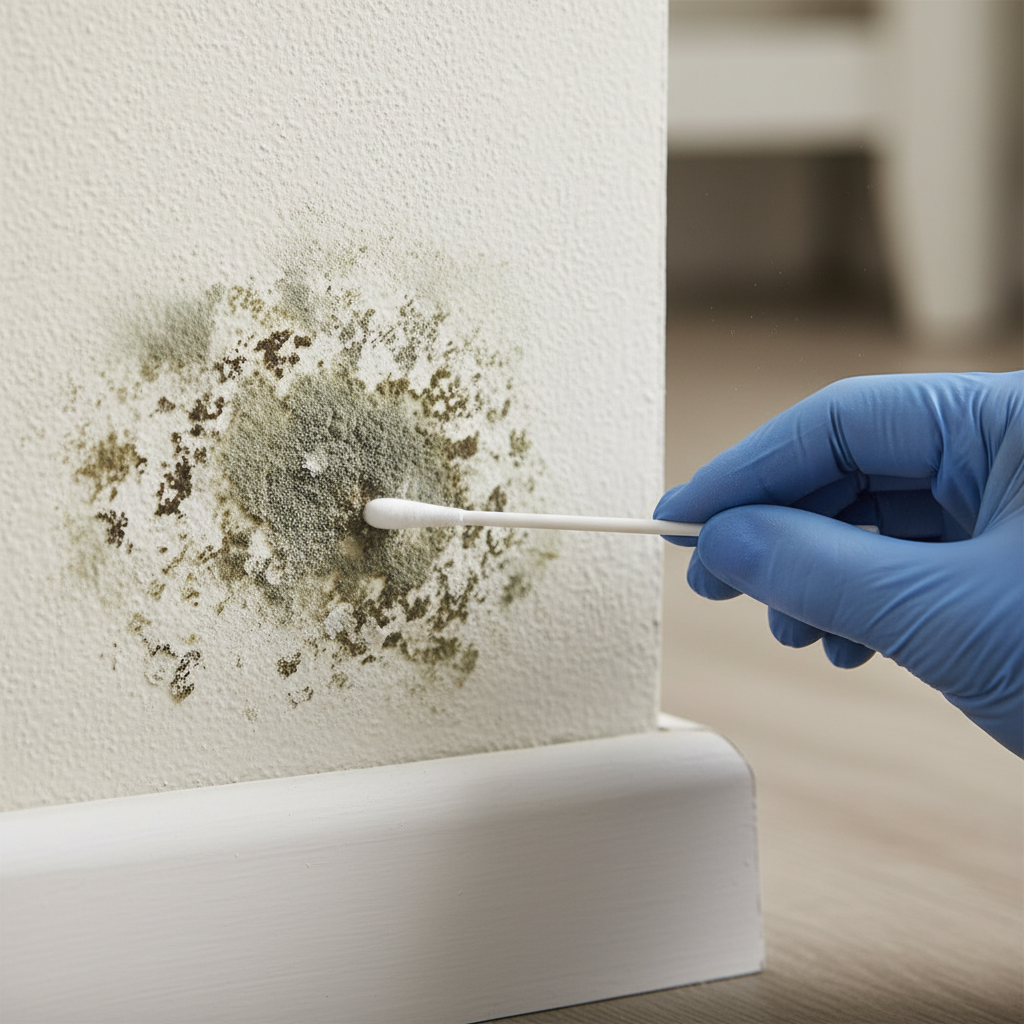
A surface sample may be considered when a stain is difficult to distinguish from mould, when a project requires limited documentation, or when a qualified professional needs information about a particular material. It should not be used to imply that an entire property is safe or unsafe based on one swab.
How can homeowners prepare for accurate mould detection?
Before an inspection, write down when the odour or staining began, what leaked, how long materials were wet, and whether any cleaning or painting has already occurred. Photographing changes over time can help, but do not disturb suspected mould just to obtain a better picture.
- Keep access clear to the attic hatch, basement, crawl space, mechanical room, under-sink cabinets, and areas near known leaks.
- Share repair records, flood history, roofing work, plumbing events, and information about recurring condensation.
- Do not dry-brush, sand, or aggressively disturb suspected mould before professional advice when contamination may be extensive.
- Ask what the assessment will document, whether sampling is recommended, and how the moisture source will be addressed.
- For larger contamination, vulnerable occupants, or commercial settings, ask about containment, HEPA filtration, work sequencing, and post-remediation verification.
Ontario workplace guidance identifies sustained or extensive visible mould on interior surfaces as unacceptable and describes moisture problems - including leaks, flooding, water intrusion, and condensation - as primary causes. Read the Ontario alert about mould in workplace buildings when planning an assessment for an office, retail property, warehouse, school, or healthcare setting.
What can you check yourself, and when should you call a professional?
Homeowners can monitor humidity, look for obvious leaks, inspect accessible areas, and replace or clean equipment according to manufacturer instructions. A basic hygrometer can help identify persistently humid rooms, but a humidity reading does not locate hidden mould or establish the condition of a wall assembly.
Professional help is appropriate when mould is extensive, keeps returning, involves hidden cavities, follows significant water damage, affects an HVAC system, or requires containment and documentation. Toronto guidance recommends professional remediation for larger or extensive contamination areas of 4 square metres or more, while the underlying water or humidity problem must be corrected in every case. The City of Toronto mould guidance provides local context for that decision.
A qualified assessment is also useful before buying or selling a property when there is a known leak, persistent odour, visible damage, or disagreement about the scope of a problem. The goal is a defensible plan, not a reassuring label based on a single test.
How do you prevent mould from returning?
Prevention begins with moisture control rather than repeated surface cleaning. Repair roof and plumbing leaks promptly, direct downspouts away from foundations, improve bathroom exhaust, keep attic ventilation paths clear, and use dehumidification where basement humidity remains high.
Attics
Confirm that bathroom and kitchen exhaust ducts discharge outdoors and that soffit intake and roof exhaust are not blocked. Wet insulation, darkened sheathing, condensation, or frost at nail tips should prompt investigation of ventilation and air leakage before the area is closed.
Basements and crawl spaces
Look for seepage at foundation joints, damp stored goods, condensation on cool surfaces, and finished materials that contact concrete. Keep drainage functioning, address water entry, and monitor humidity during Ontario’s more humid months.
Bathrooms, kitchens, and HVAC systems
Run exhaust fans during showers and long enough to clear moisture, repair slow leaks under sinks, and maintain coils, drain pans, filters, and accessible duct components. If an odour is concentrated around supply or return vents, include the HVAC system in the investigation rather than masking it with fragrance.
ASM Mold Removal Inc. can assess attics, basements, crawl spaces, HVAC areas, homes, and commercial properties across Ontario. The company’s process begins with a free inspection and moisture assessment and can include containment, HEPA filtration, eco-friendly EPA-approved products, repairs, restoration, and a Mold Remediation Warranty Certificate after completion and inspection.
What should an Ontario mould assessment report contain?
A useful report should identify the inspected areas, observed conditions, moisture pathways, readings or other supporting observations, photographs, limitations, and recommended next steps. If sampling was performed, it should state where and why samples were collected and explain how the results affect the plan.
The report should also separate confirmed observations from possibilities. For example, a thermal anomaly can justify checking a wall, but it should not be presented as proof of mould. Similarly, a laboratory result from one sample should not be treated as a complete assessment of every room.
For professional indoor-air investigations, Health Canada advises that roles and potential conflicts should be considered in advance. Its guidance for indoor air quality professionals is relevant when a property owner, employer, consultant, restoration contractor, and laboratory are all involved.
Frequently Asked Questions
What is the difference between mould detection and mould inspection?
Mould detection is a consumer-friendly description of finding mould and the moisture conditions behind it. A mould inspection or assessment is the structured process used to do that work, usually through visual review, moisture investigation, and selective additional testing.
Do I always need air testing for mould?
No. Air testing is generally not recommended as a routine first step because it does not reliably identify the cause of mould damage or predict health effects. It may be considered when inspection findings leave a specific question unresolved or when project documentation requires it.
Can thermal imaging find mould behind a wall?
Thermal imaging can reveal temperature patterns that may justify checking for moisture or air leakage behind a wall. It cannot identify mould by itself, so the pattern should be correlated with moisture readings, visible evidence, building history, and, where justified, further investigation.
When should I arrange professional mould detection?
Arrange an assessment after significant water damage, when a musty odour persists, when growth returns after cleaning, or when staining or dampness may be hidden. Professional support is especially appropriate for extensive contamination, HVAC involvement, commercial properties, and situations requiring containment or written documentation.
Arrange a mould assessment in Ontario
If you have a leak, persistent odour, visible growth, or unexplained dampness, ASM Mold Removal Inc. can provide a same-day inspection and moisture assessment in Scarborough and across Ontario. Request an assessment and discuss the next step with the team.


