Last updated: October 2026
By Asmmoldremoval • Last updated: 2026-10-24
Typical Mold Treatment Cost in Ontario
There is no official Ontario price schedule for mold removal. Published contractor estimates are useful as planning ranges, but they are not guaranteed quotes because the visible patch may not show the full extent of moisture damage, contamination, or required rebuilding.
For a small, contained job involving one patch on a hard surface, current published Ontario estimates commonly fall around $500 to $1,500. A medium project involving one room, drywall or insulation removal, containment, and air scrubbing is often described in the range of $1,500 to $4,000. Large or whole-basement projects, multiple affected zones, or HVAC involvement may reach $4,000 to $10,000 or more.
Scarborough-specific contractor estimates show a similar spread. Small bathroom or single-wall work may be quoted around $1,200 to $2,800, while full-basement or attic projects can range from approximately $4,500 to $12,000 when access, clearance, and rebuilding are included. These figures are comparison information rather than a promise from ASM Mold Removal Inc.; a site assessment is needed before a responsible quote can be prepared.
| Project scale | Typical situation | Published planning range | Why the range changes |
|---|---|---|---|
| Small | One contained patch or hard surface | $500–$1,500 | Surface type, access, moisture source, and whether materials can be cleaned |
| Medium | One room with drywall or insulation removal | $1,500–$4,000 | Containment size, air scrubbing, disposal, drying, and repairs |
| Large | Whole basement, attic, several rooms, or HVAC involvement | $4,000–$10,000+ | Multiple zones, extended filtration, structural work, and verification |
The important distinction is between remediation and reconstruction. Mold remediation addresses the contamination and its source; replacing drywall, insulation, flooring, cabinetry, or finishes afterward may be a separate part of the overall project. Ask whether each proposal includes demolition, disposal, drying, repairs, testing, clearance documentation, and tax so that you compare equivalent scopes.
What Mold Treatment Includes
Mold treatment is not simply spraying a visible stain. A complete plan identifies why moisture accumulated, controls the work area, removes or cleans affected materials, filters airborne particles, dries the structure, and explains how recurrence will be prevented.
Assessment and moisture diagnosis
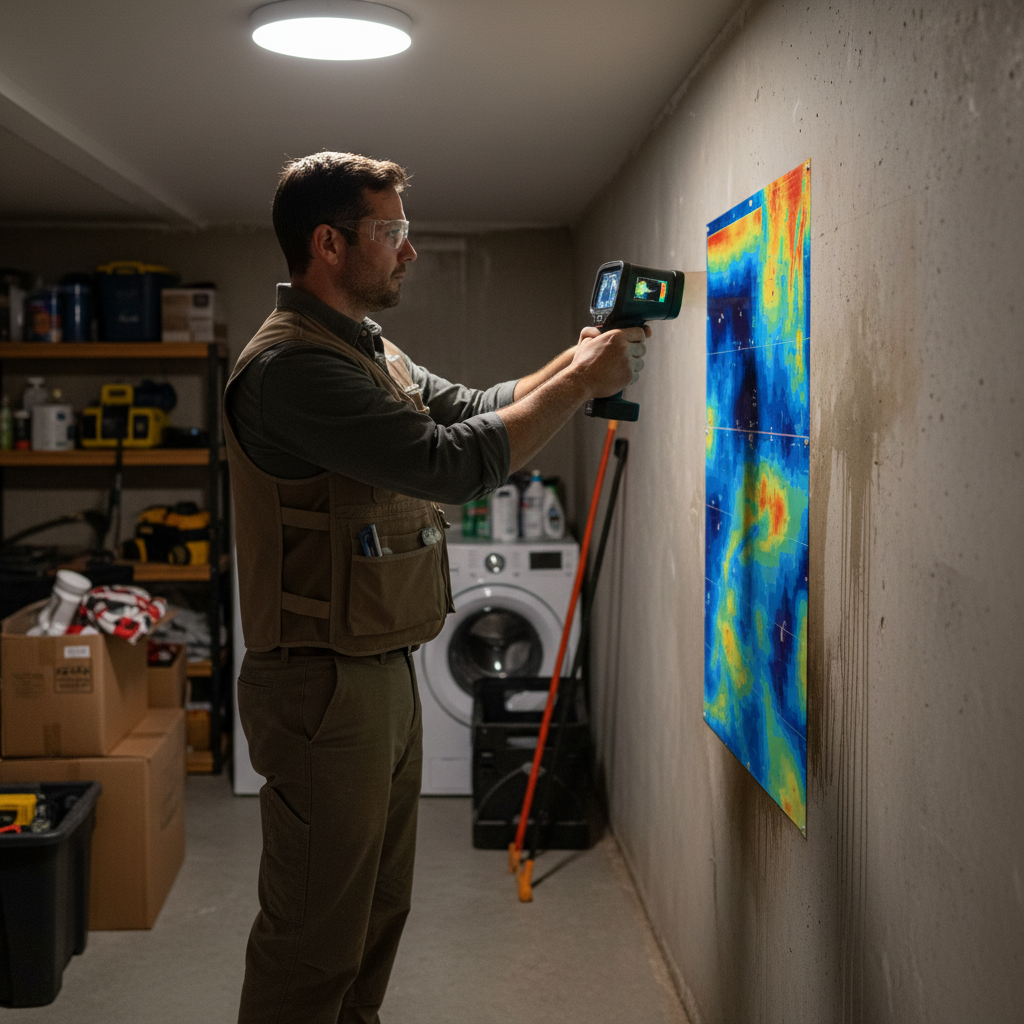
The first decision is whether the area is still receiving moisture. Technicians may use visual inspection, moisture meters, and thermal imaging to locate wet materials or temperature patterns that deserve closer investigation. Sampling can be appropriate when documentation or uncertainty makes it useful, but visible mold and a known moisture source do not always require testing before safe work begins.
Containment and air control
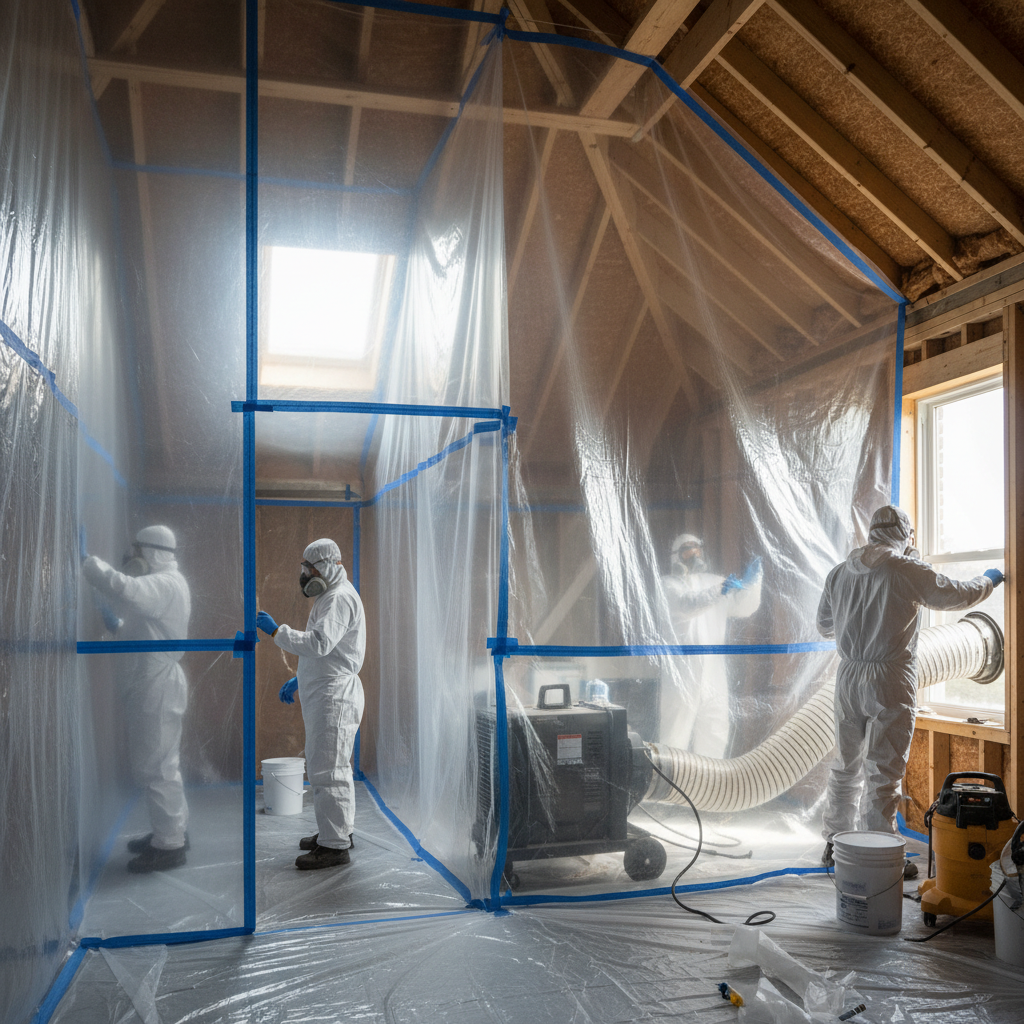
Containment separates the work zone from clean areas. Poly barriers, zipper doors, and negative air help keep disturbed dust and spores from moving through the building. The size and design of containment depend on the room, access route, pressure control, and materials being disturbed.
Removal, cleaning, and drying
Porous materials such as affected drywall, insulation, carpet, or ceiling tile may need removal when cleaning cannot reliably restore them. Harder or semi-porous materials may be cleaned with HEPA vacuuming and appropriate products when their condition allows. The area must then be dried and the moisture source corrected before finishes are closed again.
Verification and prevention
Project records can include photographs, moisture readings, work descriptions, and testing results when testing is used. ASM Mold Removal Inc. provides a Mold Remediation Warranty Certificate after completion and inspection. Prevention recommendations may involve ventilation, insulation, drainage, roof or plumbing repairs, vapor control, and dehumidification.
ASM Mold Removal Inc. provides a documented remediation approach for residential and commercial properties, including attics, basements, crawl spaces, and HVAC-related concerns. The company begins with a free inspection and moisture assessment and can coordinate full repair or restoration when the scope requires it.
What Changes Mold Treatment Cost?
The affected square footage matters, but it is only one part of the estimate. Two areas with the same visible size can require very different work if one is on exposed concrete and the other is behind finished walls or connected to an HVAC system.
Moisture source and duration
A single, recently corrected leak is generally easier to scope than continuing seepage, condensation, a roof defect, or a plumbing failure that is still active. Long-term moisture can affect insulation, framing, flooring, and hidden cavities beyond the original stain. Until the source is corrected, cleaning alone does not provide a durable solution.
Area, material, and contamination pattern
Drywall and insulation can require removal because they absorb moisture and cannot always be restored in place. Wood framing may sometimes be cleaned and dried, while concrete, metal, and plastic often allow different methods. Growth inside a wall cavity, under flooring, across attic sheathing, or in an HVAC component requires more controlled access than an exposed surface.
Access and building use
A low attic, confined crawl space, finished basement, occupied office, school, healthcare facility, or retail setting can require additional setup and scheduling. Commercial work may be phased or performed after hours to protect operations. Long carrying routes, restricted parking, furniture movement, and separate clean and dirty paths can also affect labor.
Containment, filtration, and disposal
The equipment plan must match the size and location of the work. Barriers, negative-air machines, HEPA air scrubbers, HEPA vacuums, personal protective equipment, and controlled disposal all contribute to the scope. Cutting corners on containment can spread contamination and create a more expensive cleanup.
Repairs and documentation
Some estimates cover only remediation, while others include reconstruction or prevention improvements. A real estate transaction, insurance file, lease requirement, or internal safety record may require more detailed photographs, readings, reports, or verification. Clarify those requirements before work starts rather than discovering them after the area has been closed.
For comparison, published GTA estimates place third-party mold assessment and air sampling around $300 to $800, small-area remediation around $1,500 to $4,000, and full-basement or large-area work around $5,000 to $18,000. The figures demonstrate why a written scope is more useful than a phone price: the same label, such as “basement mold,” can describe very different conditions.
How Professional Mold Remediation Works
A sound process moves from diagnosis to control, removal, drying, and verification. The sequence matters because disturbing mold before containment or closing materials before they are dry can increase the affected area and create repeat work.
- Discuss the history. The technician records leaks, flooding, condensation, odours, visible growth, previous repairs, occupant concerns, and any time limits such as a pending sale.
- Inspect and map moisture. Visual observations and moisture readings help identify what is wet, what is affected, and whether adjacent areas need investigation. Thermal imaging can help target hidden anomalies but does not replace confirmation with moisture measurements.
- Define the work zone. The plan identifies entry and exit routes, barriers, negative-air requirements, equipment placement, occupant restrictions, and the materials that may need removal.
- Correct the source. Plumbing, roof, drainage, humidity, ventilation, insulation, or foundation issues must be addressed or clearly assigned before the work is considered complete.
- Remove and clean. Unsalvageable porous materials are removed in a controlled manner. Remaining surfaces are HEPA-vacuumed and cleaned with suitable products, including eco-friendly, EPA-approved agents where appropriate.
- Dry and filter. Air scrubbers and HEPA vacuums reduce airborne particulates during disturbance. Dehumidification and ventilation support drying, while readings show whether materials are ready for the next stage.
- Inspect and document. The completion record explains what was done, includes relevant photos and readings, and identifies any testing used. ASM Mold Removal Inc. issues its Mold Remediation Warranty Certificate after completion and inspection.
HEPA equipment is valuable because it is designed to capture very fine particles; however, equipment alone is not a remediation plan. It must be correctly positioned and maintained within a broader system of containment, source control, material decisions, cleaning, and verification.

How to Reduce Unnecessary Mold Treatment Cost
Lowering the total does not mean skipping containment or removing less material than the condition requires. The safest savings come from reducing moisture duration, preventing spread, making the scope clear, and avoiding repeat remediation.
1. Start drying immediately after water damage
After a leak or flood, stop the source if it is safe to do so and begin water removal promptly. Materials that remain wet for longer are more likely to require removal rather than drying and cleaning. A professional assessment within 24 to 48 hours can help define the next step before the affected area expands.
2. Do not close wet assemblies
New drywall, insulation, flooring, or trim can conceal moisture and make a later repair more disruptive. Ask for moisture readings before rebuilding. If readings remain elevated, the least expensive short-term choice may produce the most expensive long-term result.
3. Fix the cause, not just the appearance
Repair the plumbing leak, roof defect, foundation seepage, grading issue, bathroom exhaust problem, or condensation pattern that created the conditions. In attics, ventilation and insulation details may matter as much as surface cleaning. In basements, dehumidification and drainage may be central to prevention.
4. Keep clean areas clean
Close doors, limit traffic, and avoid moving contaminated items through the home. Professional containment reduces the chance that a small room becomes a multi-room project. If occupants must remain in the building, establish a clear separation between living areas and the work zone.
5. Provide useful information before the visit
Photographs, the date of the leak, repair invoices, previous inspection reports, and details about odours or seasonal changes can help the estimator prepare. Tell the provider whether you need insurance, real estate, lease, or workplace documentation. Clear information reduces duplicated visits and scope surprises.
6. Compare scopes instead of just totals
Ask each contractor to identify the affected rooms, materials to be removed, containment method, filtration, disposal, drying, testing, repairs, and warranty or completion documents. A lower number may omit demolition, source correction, or rebuilding. A higher number may include work another proposal lists separately.
7. Invest in prevention after cleanup
Maintain reasonable indoor humidity, use bathroom exhaust during and after showers, keep air moving in vulnerable spaces, and monitor areas with a history of leaks. The goal is not merely a clean surface today; it is a dry building that does not require another remediation project next season.
DIY or Professional Remediation?
DIY cleaning may be reasonable for a small, isolated area on a cleanable surface when the moisture source is understood and the person doing the work can use appropriate precautions. Larger areas, recurring growth, hidden moisture, HVAC contamination, extensive porous materials, or occupants with particular health concerns call for a more controlled assessment.
| Decision point | DIY limitations | Professional advantage |
|---|---|---|
| Finding moisture | Visible staining may hide wet cavities | Moisture meters and targeted inspection help map the scope |
| Protecting clean areas | Household plastic and fans may not control airflow | Containment and negative air are planned for the work zone |
| Material decisions | It is easy to over-remove or leave affected porous material | Removal is matched to porosity, damage, and restoration needs |
| Airborne particles | Disturbance can spread dust and spores | HEPA filtration and controlled work reduce cross-contamination |
| Proof of completion | Records may be limited | Photos, readings, reports, and a warranty certificate support documentation |
Health Canada describes a single mold patch larger than 3 square metres as large and recommends professional assessment and remediation planning for extensive growth. Toronto guidance similarly distinguishes moderate areas of 3 square metres or less from larger areas of 4 square metres or more, which should be addressed by a professional trained in mold remediation. Read the Health Canada guidance on moisture and mould for public-health-oriented cleanup considerations.
Scarborough and Ontario Considerations
Scarborough homes commonly include finished basements, vented attics, and additions or renovations with different insulation and ventilation details. Ontario’s humid summers, winter condensation, freeze-thaw cycles, and roof or plumbing failures can create different moisture patterns throughout the year. A plan that works for a basement seepage problem may not address attic condensation.
Basements and crawl spaces
Basements benefit from prompt attention to seepage, plumbing leaks, foundation cracks, and humidity. Dehumidification can help manage indoor moisture, but it cannot substitute for repairing active water entry. Crawl spaces may require careful access, vapor-control improvements, and protection of the route between the space and the home.
Attics
Attic growth is often associated with roof leaks, insufficient ventilation, bathroom exhaust discharging into the attic, or warm moist air reaching cold sheathing. Cleaning the sheathing without correcting airflow or insulation conditions can allow the problem to return. An attic scope should therefore identify both the affected materials and the building condition that created them.
Real estate and commercial timelines
Buyers, sellers, property managers, and commercial occupants may need a clear record of findings, work completed, moisture readings, and any remaining recommendations. Discuss the deadline before the inspection so containment, verification, and repairs are sequenced realistically. For commercial sites, phased or after-hours work may reduce disruption while keeping unaffected areas operational.
ASM Mold Removal Inc. serves residential and commercial clients across Ontario, including homes, offices, retail spaces, warehouses, schools, and healthcare facilities. The company offers same-day response for urgent issues, followed by a plan matched to the building and the level of contamination.
Questions to Ask Before Approving a Quote
A useful proposal should make the work understandable before demolition begins. Ask the following questions and request written answers when the project affects a sale, insurance claim, tenant, or business operation.
- What moisture source was identified, and who is responsible for correcting it?
- Which rooms, cavities, and materials are included in the scope?
- Which materials will be cleaned, and which will be removed and disposed of?
- How will the work area be contained and how will air movement be controlled?
- Are HEPA filtration, drying, disposal, testing, repairs, and rebuilding included or separate?
- What readings or inspection criteria will determine that the area is ready for closure?
- What photographs, reports, certificates, or testing results will be provided?
- What prevention work is recommended, and which items are urgent versus optional?
These questions are more useful than asking only for the lowest number. A transparent scope lets you compare providers fairly and helps prevent a small-looking estimate from growing after work has started.
Tools, Documentation, and Prevention
Professional remediation commonly uses moisture meters, thermal imaging, containment materials, negative-air equipment, HEPA air scrubbers, HEPA vacuums, protective equipment, and appropriate cleaning products. Each tool serves a specific decision: finding moisture, controlling spread, removing particles, cleaning a surface, or confirming that drying is progressing.
Thermal imaging is useful for identifying temperature differences that may indicate a hidden moisture concern, but an image is not proof of mold. Moisture measurements, visual inspection, building history, and targeted opening or testing may be needed to determine what is actually present. This distinction helps prevent both unnecessary demolition and incomplete cleanup.
Prevention recommendations should be practical for the building. Examples include repairing a roof or pipe, extending bathroom exhaust to the exterior, improving attic airflow, correcting insulation gaps, managing basement humidity, improving drainage, or installing a dehumidifier. The right recommendation depends on the cause found during assessment.
Frequently Asked Questions About Mold Treatment Cost
How much does mold treatment cost in Ontario?
Published Ontario estimates commonly place small contained work around $500 to $1,500, medium one-room remediation around $1,500 to $4,000, and large or whole-basement projects around $4,000 to $10,000 or more. Scarborough and GTA estimates can be higher when attic or basement work includes extensive containment, clearance, structural repairs, or rebuilding. These are planning ranges, not a quote for a specific property.
Is mold remediation more expensive than mold removal?
The terms are often used interchangeably, but a complete remediation scope includes more than removing visible growth. It may include moisture diagnosis, containment, source correction, cleaning, HEPA filtration, drying, documentation, and prevention. A proposal that lists only “removal” may not include repairs or the steps needed to prevent recurrence.
Do I need mold testing before treatment?
Not always. When visible mold is present and the moisture source is clear, a professional may be able to define safe work without delaying for sampling. Testing can be useful when the condition is uncertain, when documentation is required, or when verification after work will support a real estate, insurance, workplace, or occupant concern.
Can I stay in my home during remediation?
Often, occupants can remain in unaffected areas when the work zone is properly contained and negative air and HEPA filtration are used. The answer depends on the location, size, HVAC connections, occupants, and level of disturbance. The remediation plan should identify restricted areas, entry routes, and any circumstances that require temporary relocation.
What makes attic mold treatment expensive?
Attic access, insulation handling, the size of the affected sheathing, roof leaks, ventilation defects, and the need for disposal or rebuilding can all increase the total. Treating the wood without correcting warm moist air or inadequate ventilation can lead to repeat work. A useful attic assessment considers both the contamination and the roof-and-ventilation conditions.
What documents should I receive after remediation?
Ask for a completion summary, photographs, relevant moisture readings, details of materials removed and cleaned, and any testing results that were used. ASM Mold Removal Inc. provides a Mold Remediation Warranty Certificate after completion and inspection. If the project supports a sale, insurance claim, lease, or workplace record, confirm the required format before work begins.
Get a Clear Mold Remediation Plan
Mold treatment cost becomes easier to control when the moisture source, affected materials, containment plan, and documentation requirements are identified before work starts. ASM Mold Removal Inc. provides Ontario-wide, same-day response, free inspection and moisture assessment, HEPA filtration, containment, remediation, and prevention guidance for residential and commercial properties.


