This article helps Ontario homeowners, buyers, sellers, and agents compare and verify a mold remediation warranty certificate. You will get an itemised checklist of the warranty clauses that matter, the tests and documents you must require, contractor vetting steps that map to warranty reliability, and practical actions to take before you rely on any certificate for a sale or insurance claim.
What a mold remediation warranty certificate is and what it usually covers
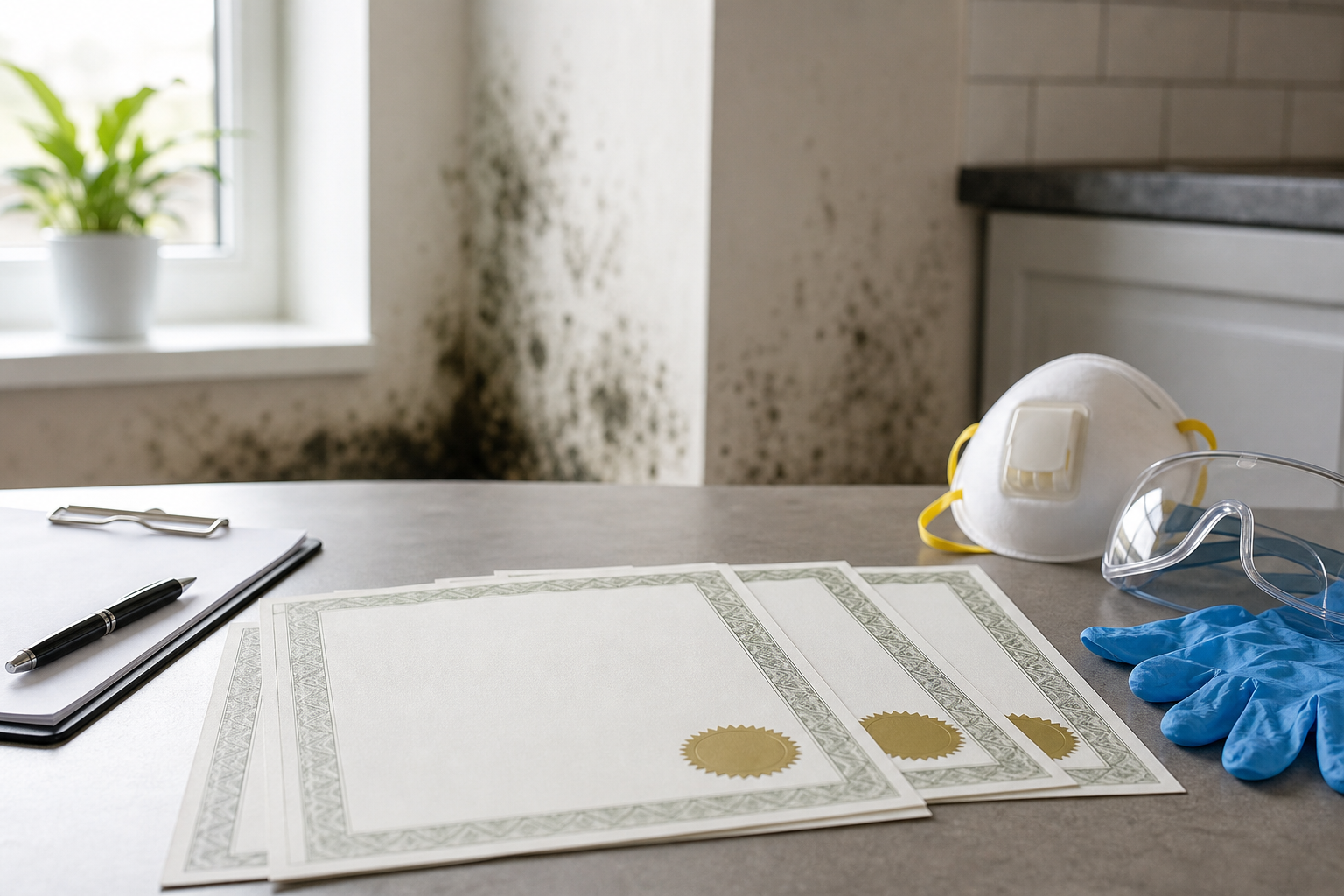
A mold remediation warranty certificate documents the work a contractor completed, the conditions under which the work was done, and limited commitments about recurrence within a specified period. It is evidence that remediation and any agreed testing were performed, not an absolute guarantee that mold will never return. For example, consumer guides explain that a remediated space that develops visible mold again within a few months often points to incomplete removal or an unresolved moisture source, and a warranty is meant to address those contractor responsibilities rather than eliminate all future risk. See a practical overview at AbateLocal for more context.
Local service providers describe certificates as a post-project assurance that follows inspection, remediation, and clearance checks. For a concrete example of a provider that issues a Mold Remediation Warranty Certificate after inspection and completion, see ASM Mold Removal's service summary on their website.
Seven warranty clauses to compare: an itemised checklist
When comparing offers from different contractors, use these seven clauses to make apples-to-apples comparisons. Each clause tells you what the certificate actually protects, what conditions attach to a claim, and what evidence you should expect to receive.
1. Coverage period and remedy limits
Check the length of the coverage and the remedies the contractor promises. Common coverage windows range from 90 days to several years. The certificate should say whether a valid claim will trigger corrective work, a re-inspection, or reimbursement for testing and repairs. Short or vague timeframes or language that limits remedies to "assessment only" are weak. AbateLocal notes that early recurrence typically indicates incomplete work or unresolved moisture, which the warranty should explicitly address.
2. Scope: treated areas, components, and workmanship versus environmental guarantees
Confirm exactly which surfaces, rooms, and systems are covered. Many certificates cover only the treated surfaces and specific repairs. Few reliable certificates guarantee whole-house air quality unless independent clearance testing supports that claim. Canadian guidance reminds buyers to treat workmanship guarantees separately from broader environmental claims so it is clear what the contractor is actually promising.
3. Exclusions and conditional clauses to watch for
Common exclusions include new water events, unresolved plumbing or roof leaks, owner actions that disturb insulation or finishes, and cross-contamination through HVAC systems. Explicitly note whether the warranty requires you to follow a moisture-control plan as a condition. If the contractor excludes any recurrence unless you follow a contractor-prescribed maintenance program, make sure that program is reasonable and documented.
4. Testing and clearance conditions required to issue or void the certificate
Look for clear language on what tests were performed before issuing the certificate and what tests are required to validate a future claim. A trustworthy certificate ties issuance to documented moisture readings and to independent post-remediation clearance testing, and it states which test types count, for example, surface samples or independent air samples. Industry buying guides recommend independent clearance testing as a standard condition to confirm successful remediation; see RestoreAdvisor and Calgary Restoration for recommended testing and clearance practices.
5. Transferability and limits for future owners
If you are selling a property, determine whether the certificate is transferable to a new owner and whether the transfer imposes further conditions. Transferability increases the certificate's value in a real estate transaction, but many warranties restrict transfer or shorten the remaining term.
6. Claim process, required evidence, and time limits to file
The certificate should describe the exact steps to file a claim, the required supporting evidence such as lab reports and moisture logs, and the notification deadlines. A fair claim procedure requires prompt notification and an independent inspection opportunity. Vague or onerous claim steps are a red flag.
7. Limitations of liability and caps on payment
Many certificates cap the contractor's liability to the original remediation cost or to a specific dollar limit. If remediation failure would trigger larger repairs, negotiate a higher remedy limit or a defined scope of corrective work rather than a simple monetary cap.
How to verify a certificate: tests, documentation, and independent clearance
Do not accept a certificate without the supporting records. A verification packet should include dated before-and-after photos, the remediation scope of work, moisture readings taken with calibrated instruments, and laboratory reports for any samples used to document clearance.
Independent post-remediation clearance testing from a qualified third party is a critical verification step. Industry sources advise requiring independent clearance testing rather than relying solely on contractor-run tests, because a third-party report reduces conflict of interest and documents baseline air and surface conditions for future claims. For recommended practices and the types of tests to ask for, see RestoreAdvisor and Calgary Restoration.
Keep every document in a dedicated file you can attach to sale documents, insurance claims, or future warranty requests. If a certificate was issued without independent clearance testing, insist on a signed amendment that ties the warranty to an independent clearance report before you close a sale or rely on the certificate.
Contractor vetting checklist tied to warranty reliability
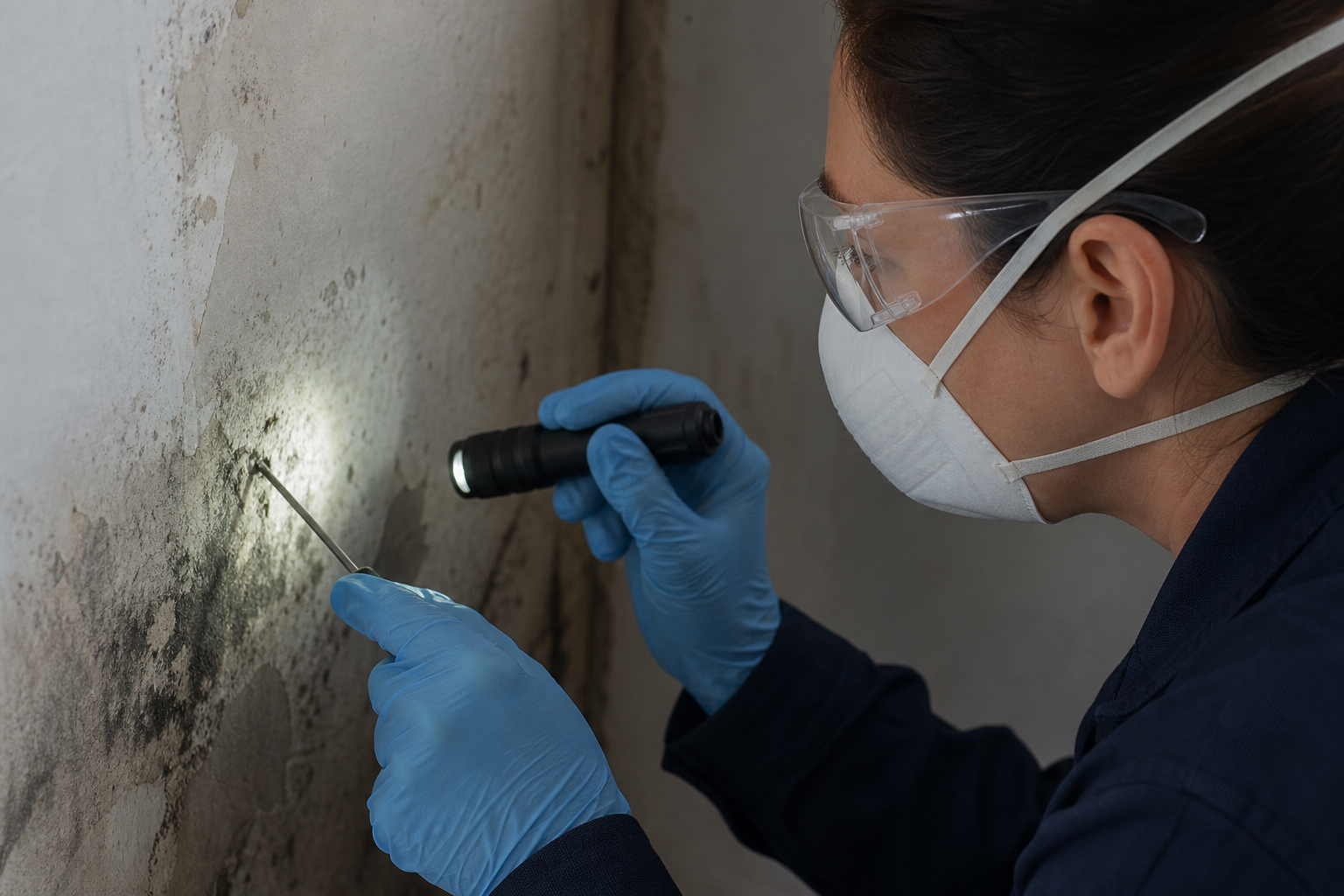
Certificates are only as reliable as the contractor behind them. Use this vetting checklist to connect warranty language to the contractor's capacity to deliver on the promise.
Certifications, insurance, and process evidence to request
- Proof of training or industry credentials such as IICRC-related training or equivalent
- General liability insurance and proof of worker coverage
- A written scope of work delivered before any remediation begins
- Lists of equipment to be used, including HEPA filtration and containment procedures
- Examples of before-and-after documentation and lab reports from prior jobs
RestoreAdvisor and MoldInspection.ca advise confirming certification and requesting an independent inspection before work begins. Suppliers that use HEPA filtration, containment, and documented moisture-control steps reduce the risk of rework, and that operational evidence should be part of the file.
Common exclusions, red flags, and contractor responses to challenge
Watch for these common red flags and the reasonable pushback you should expect to give or receive.
- Red flag: Warranty voided if the owner fails to follow an aggressive maintenance program. Pushback: Request the exact maintenance steps in writing and a reasonable grace period for compliance.
- Red flag: Certificate issued without documented moisture readings or independent clearance. Pushback: Require independent clearance before the certificate is final.
- Red flag: Broadly worded exclusion for "future mold" without limits. Pushback: Ask for examples of covered versus excluded scenarios and insist on objective test thresholds.
- Red flag: Liability capped at a nominal amount. Pushback: Negotiate a remedial-work guarantee in place of a low monetary cap.
AbateLocal and Canadian industry guides recommend challenging vague language and insisting on objective tests and documented moisture control as conditions for any valid claim.
How warranties are used in Ontario real estate transactions
In a sale, a Mold Remediation Warranty Certificate can satisfy a buyer's condition and speed closing if it is backed by independent clearance testing and complete documentation. Sellers and agents should plan for testing and certificate issuance early, because certifying remediation can add time to a closing if independent testing is scheduled late in the process.
For general consumer guidance about warranties, consult federal resources about how warranties work in the Canadian marketplace. Local remediation companies offering same-day response and a warranty certificate can help meet tight timelines, but always confirm that the certificate includes independent testing and a clear scope before relying on it in a contract.
Practical next steps: request, verify, and retain a trustworthy certificate

- Request a free inspection with moisture assessment and a written scope before any work begins. If you are in Ontario, a local provider that offers same-day response can help with urgent timelines.
- Require independent pre- and post-remediation testing that is specified in the scope, and confirm which test types will be used.
- Obtain the certificate only after the independent clearance report and all remediation records are delivered and stored.
- Keep all lab reports, photos, moisture logs, the signed scope, and the certificate in a single folder for sale, insurance, or future claims.
- If you are negotiating a sale, attach the independent clearance report to the purchase paperwork and confirm transferability terms if you expect to transfer a remaining warranty term.
If you need one now: how ASM Mold Removal issues a Mold Remediation Warranty Certificate
ASM Mold Removal provides Ontario-wide same-day response for urgent mold issues, begins with a free inspection and moisture assessment, and uses HEPA filtration, containment, and EPA-approved products during remediation. ASM issues a Mold Remediation Warranty Certificate after completion and inspection, and supplies supporting documentation including photos and moisture records. See ASM Mold Removal's service page for more details: the official website
Frequently asked questions
What does a mold remediation warranty certificate actually guarantee?
A certificate typically guarantees that the contractor performed the specified remediation and that, under the documented conditions and for the stated period, the contractor will correct covered recurrence or pay for specified remedies. The certificate rarely guarantees that mold will never return, because recurrence can result from new water events or owner actions that are outside the contractor's control. Consumer guides distinguish these limits and recommend independent clearance testing as part of the guarantee.
How long should a reasonable mold remediation warranty certificate last?
Reasonable coverage periods vary by scope and risk. Short warranties of 90 days are common for small jobs, while larger or higher-confidence projects sometimes carry longer terms. The term is less important than the clarity of remedies and the testing conditions that support a claim. AbateLocal explains that early recurrence signals a problem that a valid warranty should address.
Can a mold remediation warranty certificate be transferred to a new homeowner in Ontario?
Some certificates are transferable, and some are not. If transferability matters for a sale, negotiate it upfront and have the contractor add a transfer clause with the conditions and any fees. Always confirm transferability in writing before closing.
What independent tests should be completed before a contractor issues a warranty certificate?
Request calibrated moisture readings and independent post-remediation clearance such as laboratory-analysed air or surface samples. Industry advisors recommend third-party clearance testing rather than contractor-only testing to avoid conflicts of interest and to create a defensible baseline for future claims.
What steps should I take if mold returns during the warranty period?
Notify the contractor in writing immediately, preserve the affected area where possible, and request an independent inspection and lab testing as the certificate requires. Follow the claim steps in the certificate and keep all communications and test reports. If the contractor refuses to honour reasonable terms, document the refusal and seek independent advice.
References for recommended practices: AbateLocal, RestoreAdvisor, how to choose mold remediation services, and Calgary Restoration.
ASM Mold Removal can provide a free inspection, moisture assessment, and a Mold Remediation Warranty Certificate after remediation and clearance testing. If you need a same-day inspection or a certificate for an urgent real estate timeline, contact ASM Mold Removal through their website.


