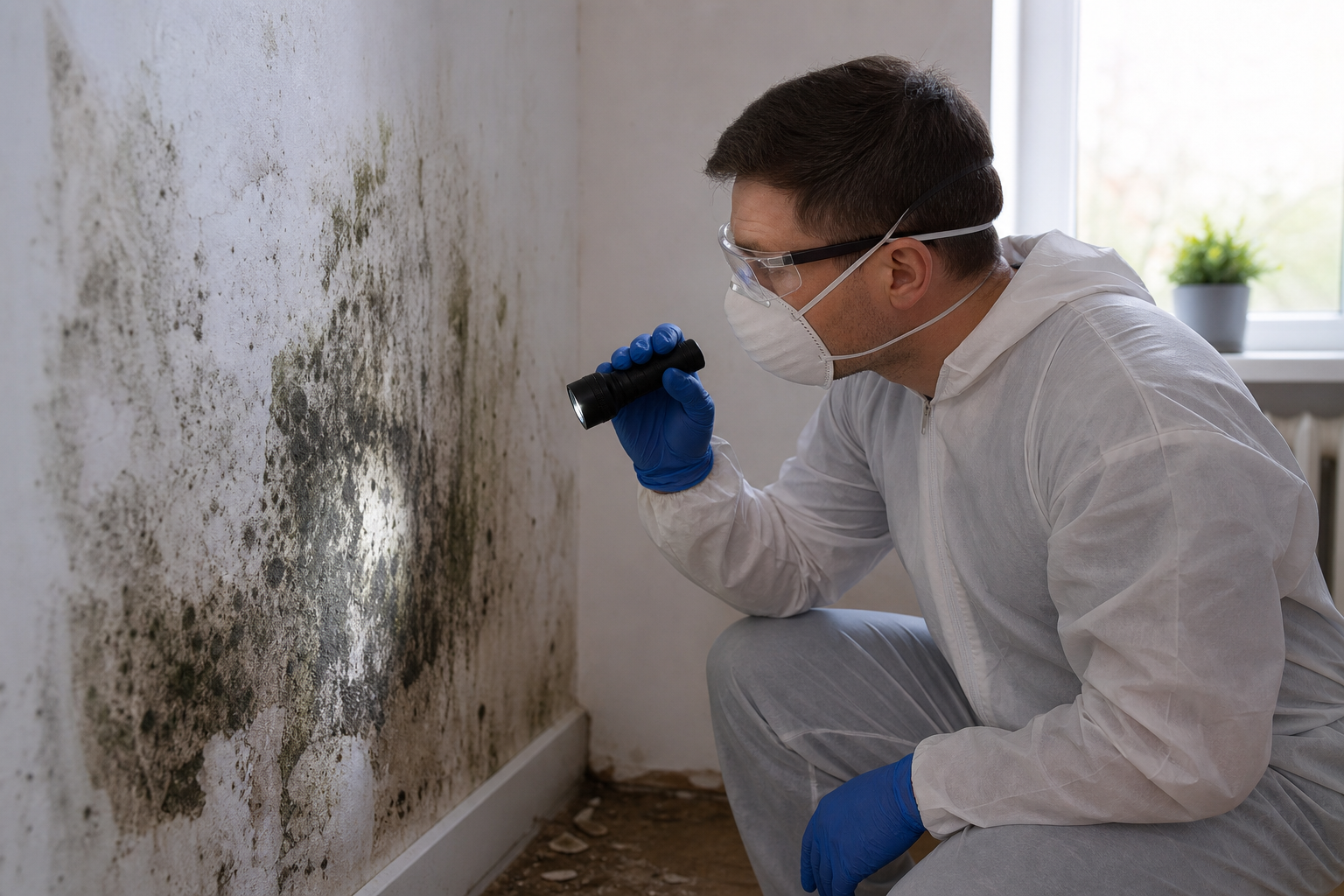
Quick triage: stop and book a professional mold inspection in Scarborough now if you have large visible growth, recent flooding or standing water, persistent musty odour, occupants with new respiratory symptoms, mould inside HVAC or hidden wall cavities, or recurring growth after repairs. If you see a small, isolated patch on a non‑porous surface with no symptoms and no ongoing leak, it is reasonable to monitor and try limited DIY cleaning first. See Health Canada’s decision chart for size thresholds and referral guidance: Guide to addressing moisture and mould indoors.
When to stop DIY and call a professional now
Book a certified inspector or remediation contractor immediately when any of the following apply. Each item is a clear stop point that usually requires a professional assessment and remediation.
- Large or widespread visible growth: growth that covers more than a small patch or appears across multiple rooms. Consult Health Canada’s chart for the correct threshold.
- Recent flooding or major water intrusion: flood, sewer backup, or prolonged standing water that soaked building materials often hides colonies in cavities and insulation.
- Persistent musty odour or unexplained dampness: odour that returns after cleaning usually points to hidden growth in attics, basements, wall cavities, or ductwork.
- Occupant health concerns: new or worsening respiratory symptoms, allergy flares, or household members who are immune compromised require immediate assessment.
- Mould in HVAC, ductwork, or inside walls: do not run mechanical systems; call a pro trained to inspect, contain, and clean HVAC contamination and concealed assemblies. Independent guides list the common signs that predict wall‑cavity mould and the need to open inspection ports Mold in Walls.
- Recurring mould after attempted repairs: if cleaning or a repair did not stop regrowth, a full moisture investigation is needed to find the source.
Local Scarborough providers can offer rapid response. For example, Asmmoldremoval advertises Ontario‑wide same‑day response and a free inspection with moisture assessment; check availability and scope on their site: Asmmoldremoval.
When you can monitor safely or try small DIY steps first
Monitor or perform limited DIY cleaning only when all of these are true: the affected area is small and isolated, there is no ongoing water source, no one in the home has new or severe symptoms, and the material is non‑porous or easily cleaned. Health Canada explains when homeowners can handle small areas and when to refer to a professional Guide to addressing moisture and mould indoors.
Safe monitoring and limited DIY steps:
- Photograph the area from multiple angles, include a ruler or object for scale, and use a date in the filename.
- Write a short timeline: date first noticed, recent leaks or storms, and any occupants’ symptoms.
- Stop the moisture source when possible, and dry the area with fans and a dehumidifier.
- Wear nitrile or rubber gloves, eye protection, and an N95 respirator while cleaning. Do not sweep or use a regular vacuum.
- Clean small patches on hard, non‑porous surfaces with detergent and water; discard heavily contaminated porous materials such as insulation or ceiling tiles.
- Monitor for recurrence for a short, defined period. If it returns, the odour persists, or symptoms worsen, schedule a professional inspection.
Do not cut into walls, ducts, or insulation yourself to look for hidden growth. Those actions can spread contamination and must be done with containment and HEPA filtration by trained technicians.
What a professional mold inspection in Scarborough includes
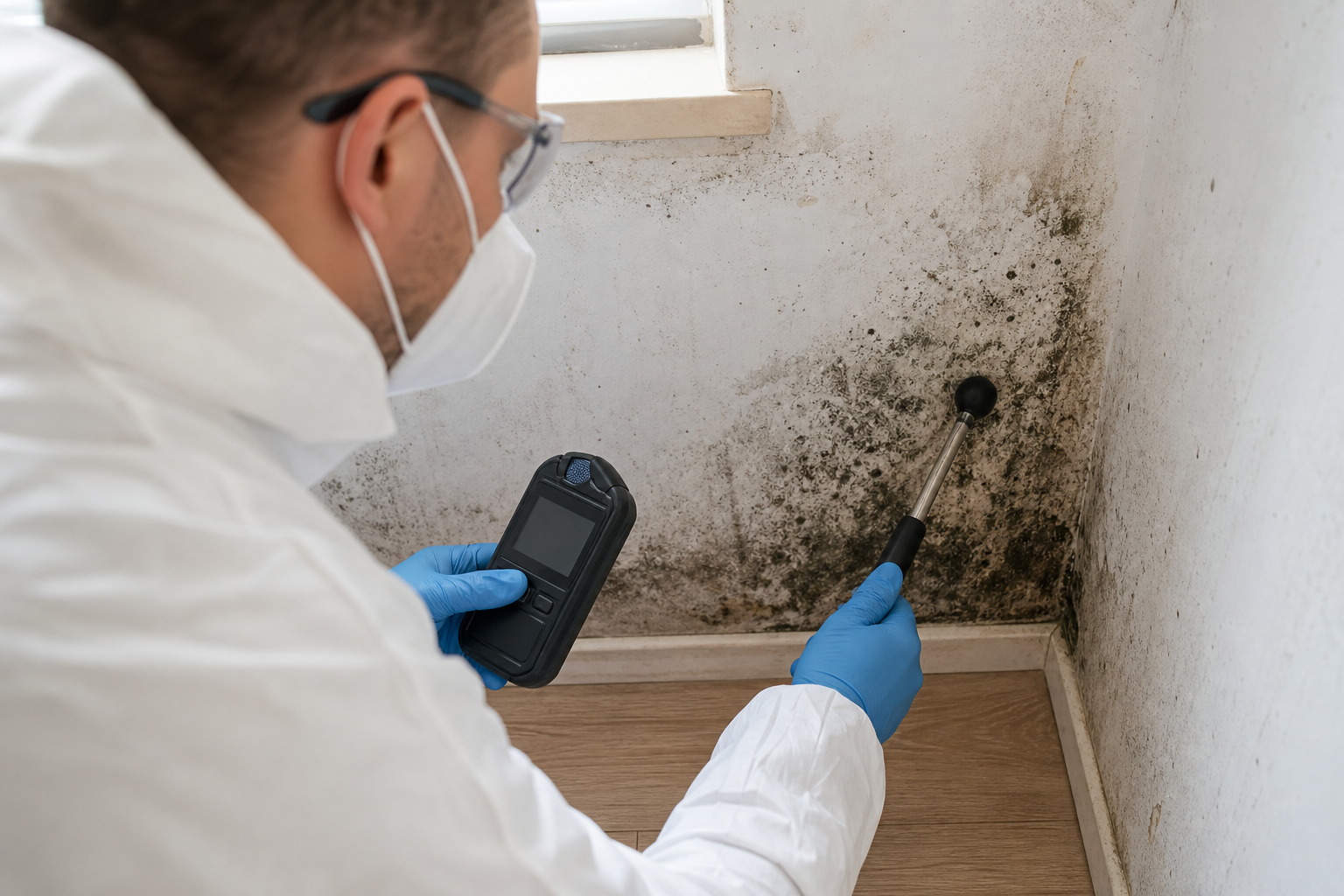
A professional inspection follows a defined scope so you receive clear findings and actionable next steps. Qualified inspection reports typically contain a scope statement, executive summary, system‑by‑system findings with photos, moisture readings, and recommended next actions or remediation estimates. This structure is consistent with field guides for mould inspections Mold Inspection Checklist and buyer/seller checklists used in real estate contexts Mold Home Inspection Checklist.
- Scope statement: exactly what was inspected and whether sampling was performed.
- Visual inspection: surfaces, attics, basements, crawl spaces, HVAC components, and plumbing surrounds.
- Moisture assessment: moisture meters and hygrometers to locate elevated conditions that support growth.
- Thermal imaging: non‑invasive scans to locate concealed wet assemblies when indicated.
- Targeted sampling: air or surface samples only when they answer a specific question; sampling should be justified in writing.
- Photo documentation and marked plans: images tied to locations so remediation can be quoted accurately.
- Clear recommendations: remediation scope, priorities, and an estimate for repair and restoration where required.
If remediation follows, confirm the contractor uses containment, HEPA filtration, and appropriate antimicrobial or EPA‑approved treatments. Reputable providers supply before‑and‑after photos and a written clearance or warranty certificate after final inspection. Asmmoldremoval describes HEPA filtration, containment, and eco‑friendly EPA‑approved products as part of their approach and issues a Mold Remediation Warranty Certificate after completion; see their site for details: Asmmoldremoval.
Moisture assessment, thermal imaging, and lab sampling
Each tool has a role and limits. Moisture meters and hygrometers show where conditions support mould. Thermal imaging helps locate concealed wet areas but cannot identify species. Lab sampling can document types and concentrations but is only helpful when it answers a specific question, for example when distinguishing indoor problems from outdoor background levels. Independent guides note that visible growth and moisture control, rather than spore counts alone, drive remediation decisions Mold Inspection Checklist and Health Canada guidance.
How to document mould for landlords, tenants, and real estate transactions
Good documentation strengthens tenant complaints, insurance claims, and real estate disclosures. Build a consistent evidence file with photographs, dated notes, and written notifications.
- Photographs: multiple angles, measuring scale, and a clear date visible in the image or filename.
- Written timeline: date first noticed, related leaks or repairs, and onset of any health symptoms.
- Notifications: send written notice to the landlord or property manager, keep a copy, and track response timelines. Tenant guidance recommends requesting an inspection within a reasonable window and keeping records of all correspondence Mold in Apartment: Tenant Rights.
- Inspection report: a professional mould inspection report carries weight in disputes and real estate transactions, since general home inspection standards often exclude mould evaluation Mold Home Inspection Checklist.
How to choose a qualified Scarborough inspector or remediation contractor
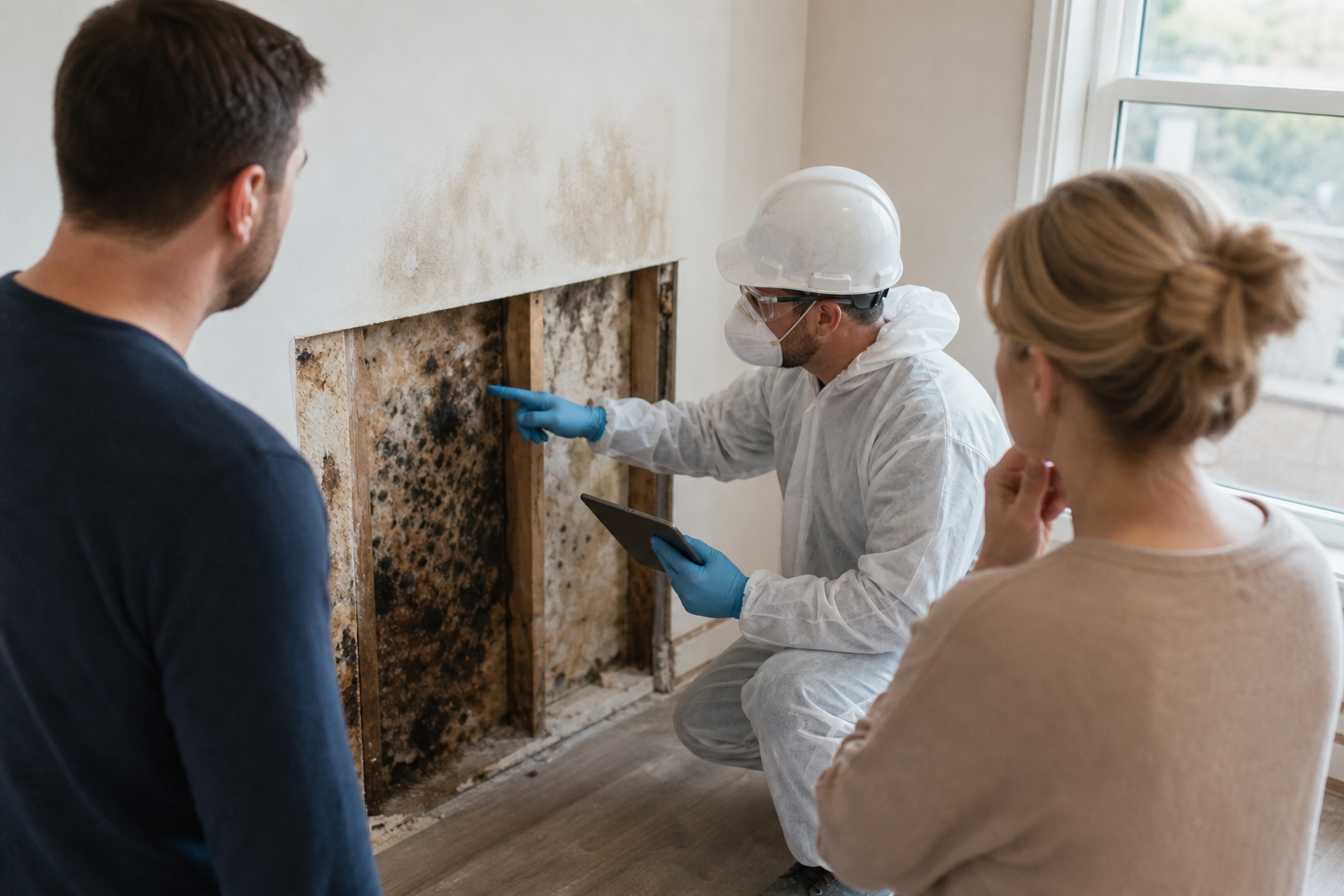
Use these decision criteria when you call for quotes. Ask for written proof and clear commitments.
- Written scope of work and exclusions.
- Proof of insurance and general liability coverage.
- Containment strategy, HEPA filtration, and details on cleaning products to be used.
- Partnerships with accredited labs if sampling is proposed.
- Transparent, itemised pricing and a timeline for work and final clearance testing.
- Before‑and‑after documentation and a Mold Remediation Warranty Certificate or written clearance on completion.
- Local availability and emergency or same‑day response when needed; confirm this at booking. Asmmoldremoval lists Ontario same‑day response and free initial inspections on their site: Asmmoldremoval.
Common objections and how to evaluate quotes and timelines
Cost and disruption are common objections. Evaluate offers by the clarity of the scope rather than price alone. Useful contractor questions include:
- What exactly is included in containment and filtration?
- Will you provide a written remediation plan and an itemised final invoice?
- Which lab will you use for sampling and what is the turnaround time?
- Do you provide a clearance inspection and a written warranty or certificate?
- How will unaffected areas be protected and what are the expected restoration steps?
A trustworthy contractor explains why each step is necessary and ties costs to specific actions. If you have urgent water damage or health concerns, ask about same‑day inspections and written warranties before work begins. More on when to involve a professional is available from Health Canada Guide to addressing moisture and mould indoors.
Next steps: booking a Scarborough inspection and what to expect on site
Prepare attic and basement access, relocate pets, and have your photo and timeline file ready. On arrival the inspector will perform a walkthrough, take moisture and temperature readings, perform targeted thermal scans if needed, photograph conditions, and advise whether sampling is necessary. A written inspection report and remediation estimate usually follow within a few days; lab results take longer if sampling is done. If remediation occurs, request details on containment, HEPA filtration, EPA‑approved products, and the issuance of a Mold Remediation Warranty Certificate after final clearance. For Scarborough availability and to request a free inspection and moisture assessment, visit Asmmoldremoval or call 647‑451‑0493.
Frequently asked questions
When should I get a mold inspection in Scarborough?
Get a professional inspection immediately for large or spreading growth, recent flooding, persistent odour, suspected HVAC or wall‑cavity mould, or when occupants develop new respiratory symptoms. Health Canada’s decision chart helps classify visible area size and when to involve a professional Guide to addressing moisture and mould indoors.
What does a professional mold inspection include and how long does it take?
A typical inspection includes a written scope, visual and moisture assessment, targeted thermal imaging if needed, photo documentation, and a written report with recommended next steps. Sampling is used only when it answers a specific question. Report structure commonly follows a system‑by‑system findings format used by professional inspectors Mold Inspection Checklist.
Can a standard home inspector include mould findings for a real estate sale?
Standard home inspection standards often exclude detailed mould evaluation. For real estate transactions, request a specialised mould inspection or remediation clearance because general inspectors may not perform the tests or provide the documentation you need Mold Home Inspection Checklist.
What evidence should tenants collect before notifying a landlord about mould?
Take dated photographs with scale, keep a written timeline of when you first noticed the problem and any symptoms, and send written notification to the landlord. Tenant guidance recommends documenting communications and requesting an inspection within a reasonable period; keep copies of everything for dispute resolution Mold in Apartment: Tenant Rights.
How quickly can I get same‑day mold inspection and will I receive a warranty after remediation?
Some Ontario contractors offer same‑day response for urgent situations and start with a free inspection and moisture assessment; ask about same‑day availability when you call. Reputable providers issue a Mold Remediation Warranty Certificate or clearance report after final inspection if remediation is completed to an agreed scope. See local service details at Asmmoldremoval.
If you are ready to book an inspection, choose a provider that combines fast local response, clear documentation, HEPA filtration and containment, and a written warranty or clearance certificate on completion. For Scarborough availability and to request a free inspection and moisture assessment, visit Asmmoldremoval.


