Last updated: October 2026
By Amardeep Mamidi • ASM Mold Removal Inc. • Refreshed for current Canadian guidance
Drywall, also called sheetrock, is porous because its gypsum core is covered with paper. That paper can hold moisture and support mould growth, so wiping the visible mark does not solve the problem if water has moved behind the paint. The first decision is whether the growth is limited to the surface or has affected the drywall itself.
When Is Cleaning Mold Off Sheetrock Safe to Do Yourself?
DIY cleaning may be reasonable when the patch is small, the paint is intact, the wall is firm, and the leak, condensation, or humidity problem has already been corrected. A small spot that wipes away without exposing damaged paper is a different situation from bubbling paint, brown water staining, or mould embedded under the coating.
| Condition | Recommended decision | Reason |
|---|---|---|
| Small surface spots on firm, painted drywall | Careful cleaning may be suitable | The growth appears limited to the sealed surface. |
| Soft, crumbly, swollen, or bubbling drywall | Stop and arrange professional assessment | The porous board may be water-damaged or colonized below the paint. |
| Growth across a broad area or in several rooms | Use professional remediation | Disturbance can spread spores and the moisture source may be extensive. |
| Persistent odour or recurring stains | Investigate behind the surface | Visible cleaning has not addressed the source. |
Canadian guidance recommends cleaning a wall with a damp cloth, baking soda, or a small amount of unscented soap solution while avoiding excess water. It also notes that drywall affected beneath paint generally needs to be removed and replaced. This is the central rule for drywall mold removal: do not trade a visible spot for a wetter, weaker wall.
For a second opinion about scope, ASM Mold Removal Inc. offers a free inspection and moisture assessment in Scarborough and across Ontario.
What to Do Before You Clean the Wall
Cleaning is safer and more effective when the moisture driver is under control. Repair plumbing leaks, roof or window intrusion, and condensation problems first. If indoor humidity remains high, use ventilation and a dehumidifier and confirm that the wall feels dry before disturbing the surface.
Prepare the work area
- Keep children, pets, and anyone with asthma or other respiratory sensitivity away from the work area.
- Wear gloves, eye protection, and at least a well-fitting N95 respirator. A respirator does not make a large or concealed remediation project suitable for DIY work.
- Close doors to adjacent rooms and cover nearby items that could collect dust or debris.
- Turn off HVAC circulation that could move disturbed material into other areas when practical.
- Gather disposable cloths, a bucket, unscented soap or baking soda, clean water, and waste bags.
Do not dry-brush, sand, scrape aggressively, or use a household vacuum that is not designed for fine contaminated dust. Those actions can spread particles beyond the original patch. Bleach is also not a substitute for moisture control and can add liquid to the paper face; never mix cleaning products.
How to Clean a Small Surface Patch
Use a light-touch process. The goal is to remove surface residue without soaking, abrading, or loosening the paper covering.
- Confirm the surface is intact. Press gently near the mark. If the wall gives, feels swollen, or the paper lifts, stop rather than wiping.
- Lightly dampen a cloth. Use clean water with a small amount of unscented soap, or baking soda as recommended by Canadian health guidance. The cloth should be damp, not dripping.
- Wipe from clean to dirty. Use gentle passes and change or rinse the cloth as it becomes soiled. Do not scrub hard enough to damage the paint film.
- Dry the area promptly. Use ventilation and controlled dehumidification. Do not direct forceful airflow that could spread loosened material.
- Recheck after drying. If the mark, odour, bubbling, or dampness returns, treat it as a moisture or concealed-material problem rather than repeating the wipe-down.
Do not paint over visible mould. Paint can hide a stain temporarily, but it does not remove growth or prevent it from returning. Repainting should wait until the surface is clean, dry, stable, and free of an unresolved moisture source.
When Should You Call a Professional?
Professional remediation is the safer choice when mould is beneath paint, the drywall is porous or damaged, or the affected area is not clearly small and localized. Water-damaged drywall can release spores when it is cut or disturbed, so controlled removal may be needed instead of repeated surface cleaning.
Stop DIY if you see these warning signs
- The board is soft, crumbly, swollen, or detached from the framing.
- Paint bubbles, peels, or reveals dark growth underneath.
- A musty smell remains after the visible surface is dry.
- Growth returns soon after cleaning.
- There has been flooding, sewage contamination, or a continuing leak.
- The problem extends across several rooms, ceilings, wall cavities, or HVAC components.
- A household member is medically vulnerable and could be exposed during disturbance.
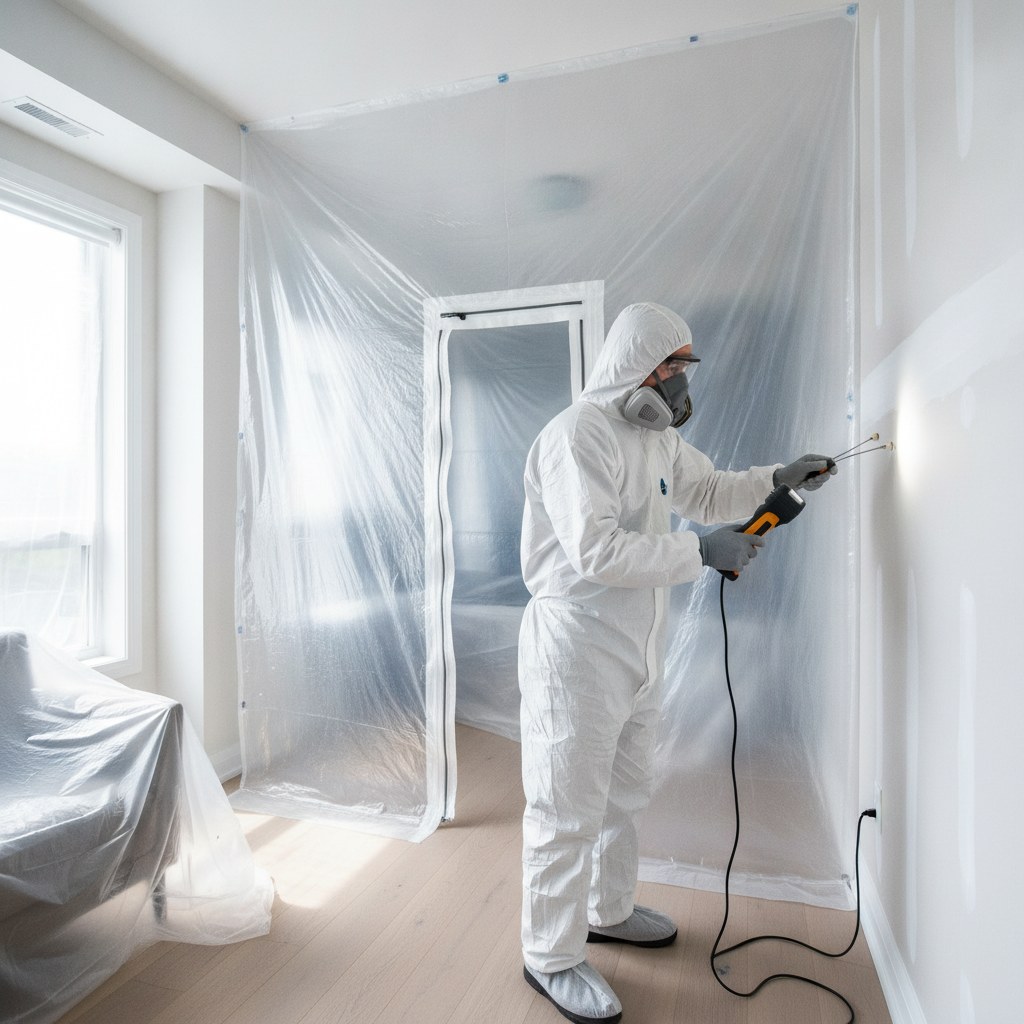
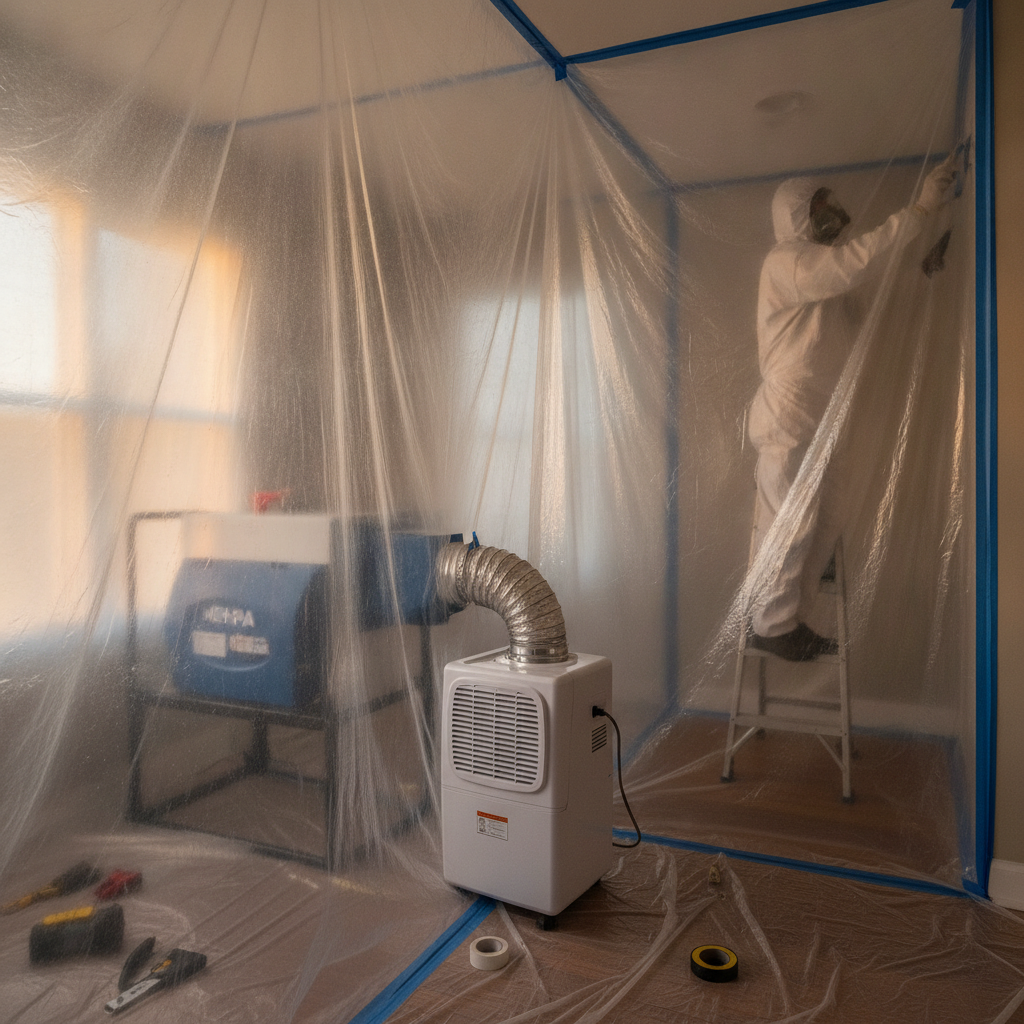
A professional process may include moisture investigation, containment, HEPA filtration, controlled removal of affected materials, detailed cleaning, drying, and prevention recommendations. Health Canada guidance for professionals emphasizes correcting the moisture cause, removing mould- or moisture-damaged materials, and containing the work area so fragments do not spread.
ASM Mold Removal Inc. provides inspection, remediation, restoration, and a Mold Remediation Warranty Certificate when professional work is completed and inspected.
Why Does Mold Keep Coming Back?
Recurring growth usually points to unresolved moisture rather than an inadequate cleaning product. Common causes include a slow plumbing leak, high indoor humidity, weak bathroom ventilation, cold exterior corners, roof intrusion, or wet insulation inside a wall or ceiling.
Check the likely moisture drivers
- Humidity: Measure indoor relative humidity and use dehumidification when levels remain high, especially in basements during humid weather.
- Bathrooms: Confirm that the fan exhausts outdoors and run it during and after showers. Keep replacement air available without allowing moisture to migrate through the home.
- Cold surfaces: Inspect exterior corners, window reveals, and top-floor ceilings for condensation or frost-related staining.
- Hidden leaks: Check around shower valves, vanities, windows, baseboards, and roof penetrations for staining, swelling, or dampness.
If the source is concealed, a moisture meter can help identify suspicious areas, but it does not prove that mould exists inside a wall. Further investigation and controlled opening may be necessary before deciding whether cleaning or replacement is appropriate.
Ontario and Scarborough Moisture Considerations
Scarborough homes experience both humid summer conditions and cold winter surfaces that can encourage condensation. Basements may need dehumidification during late spring through early fall, while top-floor ceilings and exterior corners deserve attention after cold weather or a sudden thaw.
In multi-unit buildings, avoid directing bathroom exhaust into a hallway or shared interior space. Keep the affected room contained, report building leaks promptly, and coordinate with the property manager when the source may be outside your unit. Ontario workplace guidance also identifies leaks, flooding, water intrusion, and condensation as primary causes of mould growth and warns that disturbed mouldy materials can release spores.
FAQ
Can I paint over drywall mould after cleaning?
No. Paint should be considered only after the surface is thoroughly dry, clean, stable, and free from an active moisture problem. If the mould is under the paint, the paper is damaged, or the stain returns, the affected drywall may need removal and replacement rather than primer.
What cleaner should I use on painted sheetrock?
For a small, surface-only patch, use a damp cloth with baking soda or a small amount of unscented soap solution. Avoid soaking the wall and never mix cleaning products. The safest choice depends on the surface condition; a cleaner cannot make water-damaged or internally contaminated drywall salvageable.
Do I need a respirator for a small cleaning job?
Wear a well-fitting N95 respirator, gloves, and eye protection when cleaning a small surface patch. PPE reduces exposure but does not remove the need for containment or professional help when the area is broad, concealed, water-damaged, or occupied by someone medically sensitive.
How do I know whether drywall needs to be replaced?
Replacement is more likely when the drywall is soft, swollen, crumbly, bubbling, persistently odorous, or mouldy beneath the paint. It is also appropriate when the material has been substantially water-damaged or the source cannot be corrected. An inspection can distinguish a cleanable surface mark from contamination in the porous board.
Get Help With Scarborough Mold
If you are unsure whether the growth is surface-only, arrange a moisture assessment before wiping, cutting, or painting. Contact ASM Mold Removal Inc. for Ontario-wide inspection and remediation support.


