Last updated: October 2026
By Asmmoldremoval
Attic mould is rarely an isolated cleaning problem. It is usually evidence that moisture has entered the attic through a leak, condensation, inadequate ventilation, or air leakage from the living space. Cleaning visible staining without correcting that cause can allow growth and odours to return.
ASM Mold Removal Inc. serves residential and commercial clients across Ontario, including homes, offices, retail spaces, warehouses, schools, and healthcare facilities. The company’s process begins with a free inspection and moisture assessment, followed by containment, HEPA filtration, cleaning, drying, repairs, and restoration when required.
What is attic mould remediation?
Attic mould remediation is the controlled process of identifying and correcting moisture, removing mould and moisture-damaged materials, cleaning affected surfaces, and confirming that the attic is ready for restoration. The objective is not simply to make dark staining less visible. The objective is to leave the space clean, dry, ventilated, and less likely to support renewed growth.
Remediation may include roof or flashing repairs, correction of bathroom or kitchen exhaust ducts, removal of contaminated insulation, air sealing, installation of ventilation baffles, and HEPA-based cleaning of sound wood. The appropriate scope depends on the extent of growth, the condition of the materials, and the source of moisture.
Health Canada’s guidance on moisture and mould also emphasizes dealing with the underlying moisture problem rather than treating mould as a cosmetic issue. Health Canada’s moisture and mould guidance is a useful general reference for homeowners reviewing the risks and next steps.
Why attic mould develops in Ontario homes
Ontario attics experience cold winters, freeze–thaw cycles, spring melt, summer humidity, and storm-related roof exposure. These seasonal changes can reveal weaknesses in ventilation and air sealing. In older Scarborough homes, for example, a bathroom fan that terminates in the attic can release warm, moist air against cold roof sheathing throughout the winter.
Common moisture sources
- Roof or flashing leaks: Rain and melting snow can wet sheathing, rafters, and insulation around penetrations or damaged roof details.
- Indoor air leakage: Warm air can move through an unsealed attic hatch, ceiling penetrations, plumbing chases, recessed fixtures, and other openings.
- Improper exhaust ducting: Bathroom and kitchen fans should discharge outdoors, not into the attic cavity.
- Blocked or unbalanced ventilation: Insulation can cover soffit intake paths, while inadequate exhaust prevents humid air from leaving.
- Wet or compressed insulation: Damaged insulation can hold moisture and odours while also losing thermal performance.
Dark marks, a musty smell, frost on roof nails, damp insulation, peeling ceiling finishes, or recurring staining are reasons to investigate. Mould can also be hidden beneath or behind materials, so a clean-looking section does not always establish that the problem is resolved.
Why professional attic mould remediation matters
Moisture can weaken wood over time, reduce insulation performance, and create conditions that allow mould to spread. Prompt action helps limit the amount of material requiring removal and makes it easier to identify the original cause before repairs become more extensive.
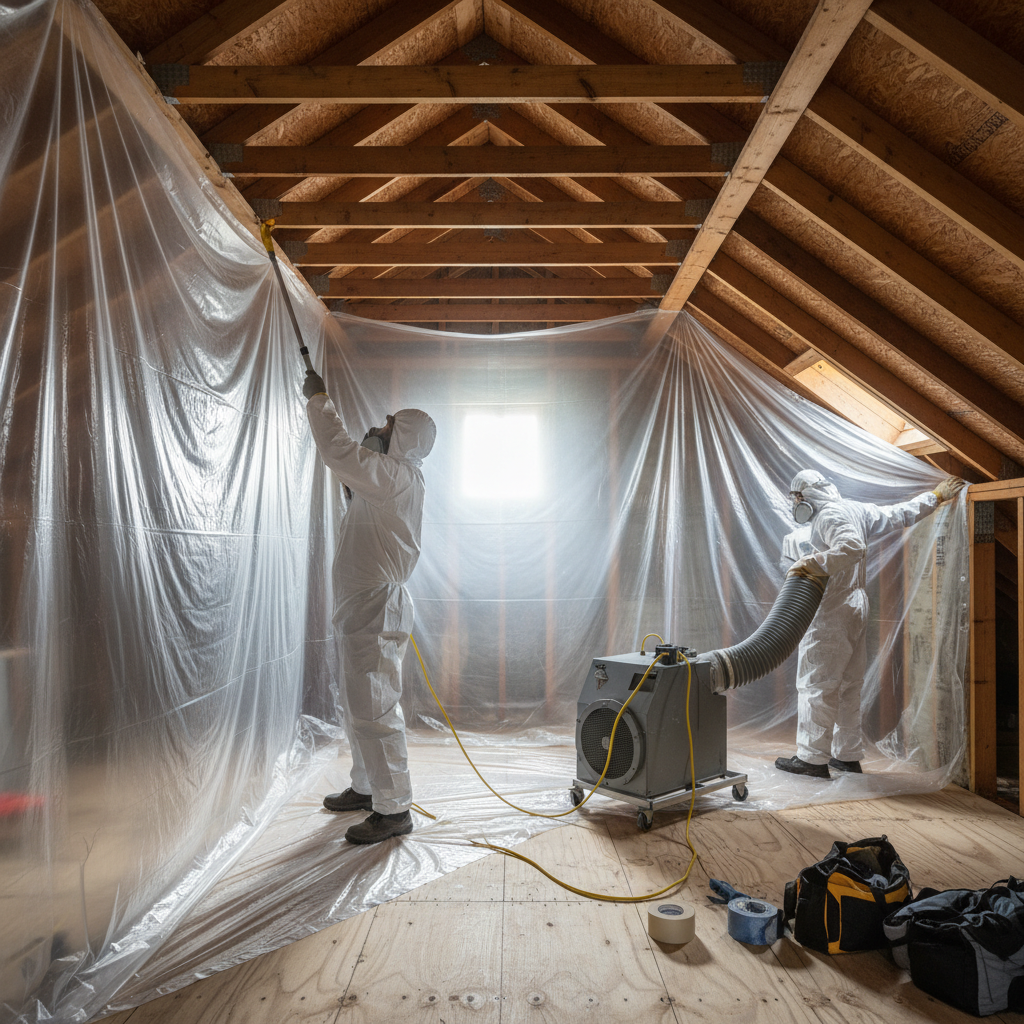
Professional containment also protects occupied areas from dust and disturbed particles during cleaning. HEPA vacuums and air scrubbers are used as part of a controlled work plan, while barriers and negative air may be appropriate for the project. The specific controls depend on the layout, affected area, and whether the property is occupied.
Documentation is another practical reason to use a structured process. Before-and-after photographs, moisture readings, a description of completed work, and information about repairs can help homeowners, buyers, sellers, agents, and property managers understand what was done. Documentation does not replace correcting the moisture source, but it creates a clearer record of the outcome.
How attic mould remediation works step by step
A sound remediation plan moves from diagnosis to source control, cleaning, drying, verification, and restoration. The sequence may change when an active leak or unsafe condition requires immediate repair, but cosmetic cleaning should not be treated as the first or only solution.
1. Inspect the attic and trace moisture
The inspection reviews roof sheathing, rafters, insulation, soffits, ridge ventilation, duct terminations, penetrations, and areas below known leaks. Moisture meters help identify damp materials, while thermal imaging may help locate temperature differences associated with moisture or air leakage. Sampling is not automatically required for every project; it may be considered when a dispute, sensitivity, clearance requirement, or unusual condition makes additional information useful.
2. Control the source before cleaning
Roof leaks, damaged flashing, disconnected ducts, blocked soffits, and attic bypasses must be addressed as part of the plan. If the source remains active, newly cleaned surfaces can become damp again. Air sealing and ventilation work should be coordinated with insulation so that intake paths remain open.
3. Set up containment and filtration
Where the project requires it, workers isolate the work area with barriers and use negative air or HEPA air filtration to reduce migration of dust. Occupants should receive clear instructions about access, protective measures, and any areas that must remain unused during the work.
4. Remove damaged materials and clean sound materials
Wet, heavily impacted, or deteriorated insulation may need to be removed. Sound wood and other salvageable materials can be HEPA vacuumed and mechanically agitated to remove settled dust, spores, and surface residue. Cleaning methods should be selected to avoid unnecessary damage to the substrate.
5. Apply treatment only where appropriate
Antimicrobial products may be used on cleaned substrates when appropriate and according to the product label. Treatment is not a substitute for physical cleaning or moisture control, and painting over staining without addressing the cause is not a durable remediation strategy.
6. Dry, verify, and restore
Dehumidification and targeted drying may be used when materials are damp. Follow-up readings, visual review, photographs, and source-control checks help establish whether the attic is ready for insulation or other restoration. Restoration may include replacement insulation, air sealing, baffles, and repairs to affected finishes.
| Stage | Purpose | Typical evidence |
|---|---|---|
| Assessment | Locate mould, moisture, and contributing defects | Inspection notes, photographs, moisture map |
| Source control | Stop leaks, condensation, or air leakage | Repair records and ventilation observations |
| Containment | Limit dust and particle movement | Work-area controls and filtration records |
| Cleaning | Remove growth and settled contamination from salvageable materials | Cleaning notes and before-and-after photographs |
| Verification | Confirm dryness and visible cleanliness | Moisture readings and final inspection |
| Restoration | Return the attic to a functional condition | Insulation, baffle, air-sealing, and repair photographs |
Cleaning methods, insulation, and ventilation repairs
HEPA cleaning and mechanical agitation
HEPA vacuuming removes loose particles and debris from framing and sheathing. Brushing or other mechanical agitation can help detach residue from sound wood, but the method should match the substrate and the extent of impact. More aggressive media methods may be considered for stubborn surface staining only when containment, filtration, and substrate protection are suitable.
When insulation may need removal
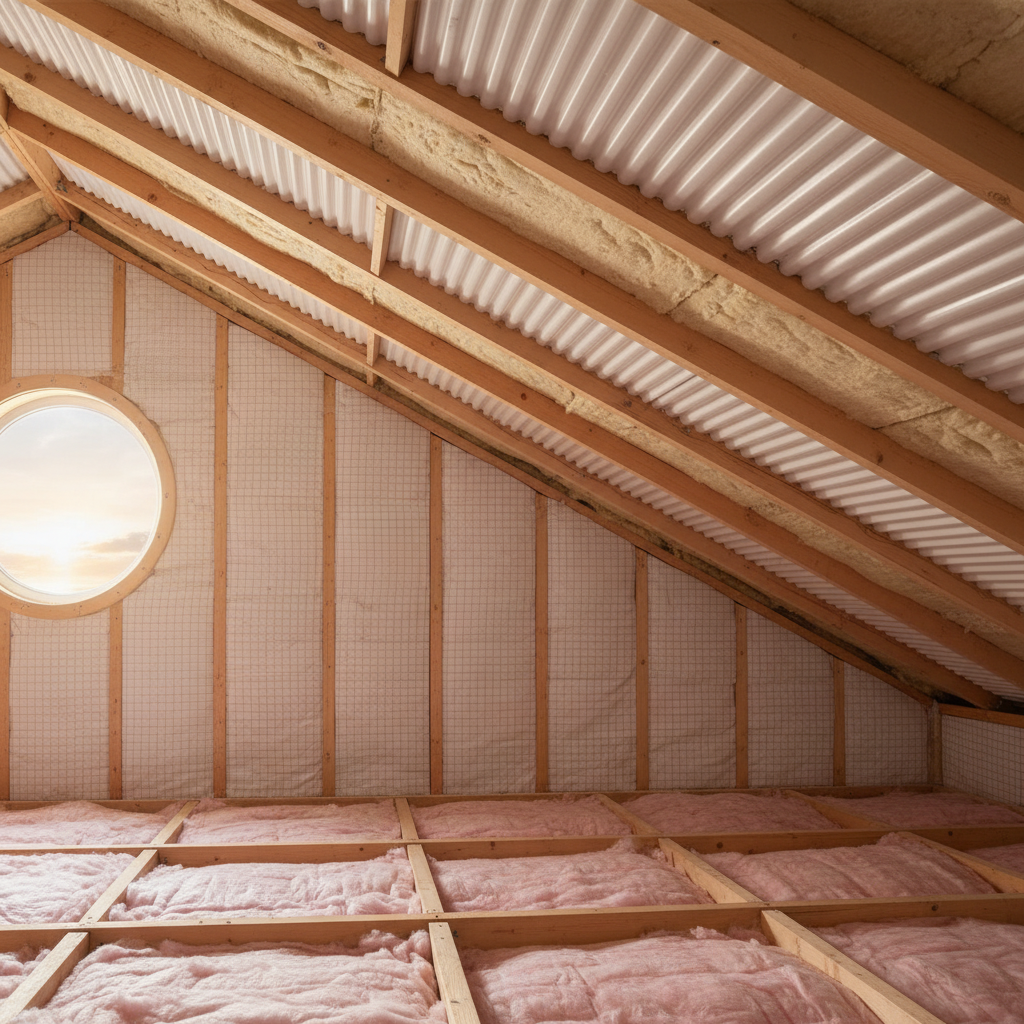
Insulation should be assessed rather than automatically preserved or discarded. Wet, compressed, odour-retaining, or visibly impacted insulation may require removal and replacement. After the attic is cleaned and dry, new insulation should be installed without blocking soffit intake channels.
Ventilation and air sealing
Effective prevention usually combines outdoor exhaust ducting, clear soffit intake, suitable ridge or other exhaust ventilation, and air sealing at ceiling penetrations. Ventilation alone will not solve a roof leak, and adding exhaust without providing adequate intake may not produce balanced airflow. A professional should assess the complete assembly before recommending changes.
For workplace properties, the response should also include communication with occupants and a plan appropriate to the extent of contamination. Ontario’s workplace guidance advises seeking specialized professional assistance when mould contamination is extensive; review the Ontario guidance for mould in workplace buildings when managing a commercial or institutional property.
What should be documented after remediation?
A useful completion file explains the problem, the source correction, the materials removed, the cleaning methods, and the verification completed. It may include inspection photographs, moisture readings, work-area photographs, repair notes, and a remediation summary. When applicable, ASM Mold Removal Inc. provides a Mold Remediation Warranty Certificate after completion and inspection.
Independent verification may be valuable when the project involves a property transaction, a dispute, extensive contamination, or occupant concerns. Health Canada’s professional indoor-air guidance highlights three important success checks: correct the real moisture cause, remove mould and moisture-damaged materials with adequate containment, and clean thoroughly to remove visible dust. The Health Canada professional guidance provides further context for evaluating completed work.
Ontario considerations for homeowners and property managers
In Scarborough and other Ontario communities, inspect the attic after significant roof work, heavy storms, prolonged cold weather, or signs of condensation. Winter frost on nails can indicate warm, humid air reaching cold surfaces, while spring staining may point to snow melt or a roof detail that requires attention.
Commercial clients should plan work around occupancy, operations, and access requirements. ASM Mold Removal Inc. provides same-day response across Ontario for urgent issues and serves both homes and workplaces, including offices, retail locations, warehouses, schools, and healthcare facilities.
- Do not disturb extensive growth without first considering containment and occupant protection.
- Do not block soffit vents when adding or replacing insulation.
- Confirm that bathroom and kitchen exhaust ducts terminate outdoors.
- Investigate recurring odours or staining even when the attic appears dry during one visit.
- Keep the final photographs, readings, repair information, and remediation summary with the property records.
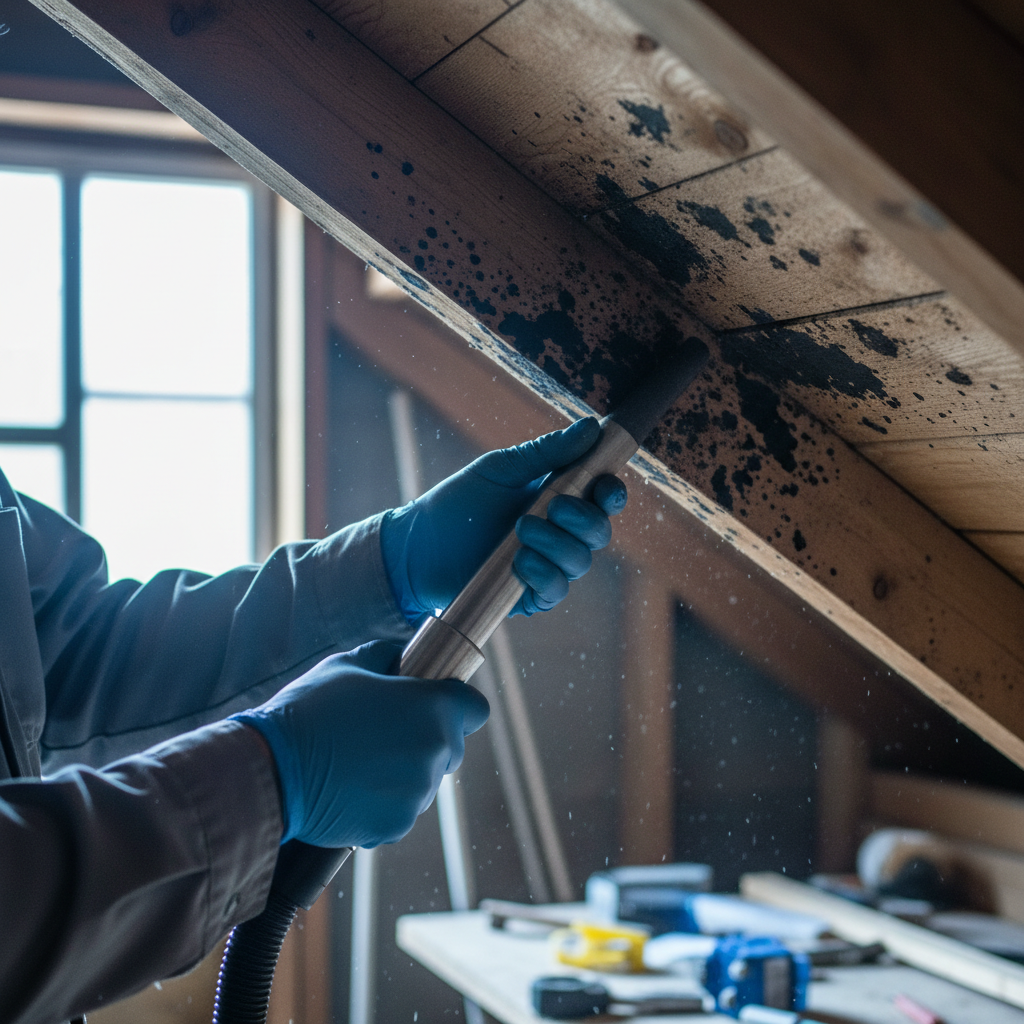
Tools used during attic mould assessment and cleanup
The tools used should answer a specific question rather than create the appearance of technical work. Moisture meters help determine whether materials are wet; thermal imaging can help identify suspicious temperature patterns; HEPA equipment controls particles during cleaning; and photographs create a visual record of conditions before and after the work.
- Moisture meters: Used to compare affected materials and monitor drying.
- Thermal imaging: Used as an investigative aid for cold spots, air leakage, or possible moisture patterns.
- HEPA vacuums and air scrubbers: Used to capture fine dust and particles during controlled work.
- Containment materials: Barriers and controlled airflow help protect adjacent occupied areas when required.
- Photographic records: Show affected areas, repairs, cleaning progress, and restoration.
FAQ about attic mould remediation
How quickly should attic mould be addressed?
Arrange an assessment promptly, particularly when the area is damp, growth is spreading, a leak is active, or occupants are noticing persistent odours. Early source control can limit damage and clarify whether insulation or wood materials can be preserved. Do not disturb extensive growth before considering containment and appropriate protective measures.
Is air testing required after attic mould remediation?
Not every project requires air testing. Visual cleanliness, correction of the moisture source, drying verification, and complete documentation may be appropriate for many residential jobs. Sampling can add useful information when there are occupant sensitivities, a dispute, a real estate requirement, or a specific clearance question.
Can attic mould be removed without replacing insulation?
Sometimes, but the insulation must be assessed for moisture, contamination, odour, and loss of performance. Wet, compacted, or visibly impacted insulation commonly requires removal and replacement. New insulation should be installed only after the source is corrected, the attic is dry, and ventilation paths are protected.
How can attic mould be prevented from returning?
Prevent recurrence by repairing roof leaks, venting bathroom and kitchen exhaust outdoors, keeping soffit and exhaust paths clear, and sealing openings that allow warm indoor air into the attic. Check the space after major storms and during cold weather if condensation or frost has occurred. Prevention is a building-maintenance process, not a one-time chemical treatment.
Plan the next step for your attic
Effective attic mould remediation combines moisture-source correction, controlled cleaning, drying, verification, and appropriate restoration. If you have found dark staining, a musty smell, damp insulation, or evidence of condensation, a documented inspection can help distinguish a small maintenance issue from a larger remediation project.
ASM Mold Removal Inc. provides free inspections, moisture assessments, professional mould removal, restoration, and Ontario-wide same-day response for residential and commercial properties. Request an attic assessment to discuss the condition of your property and the appropriate next step.


