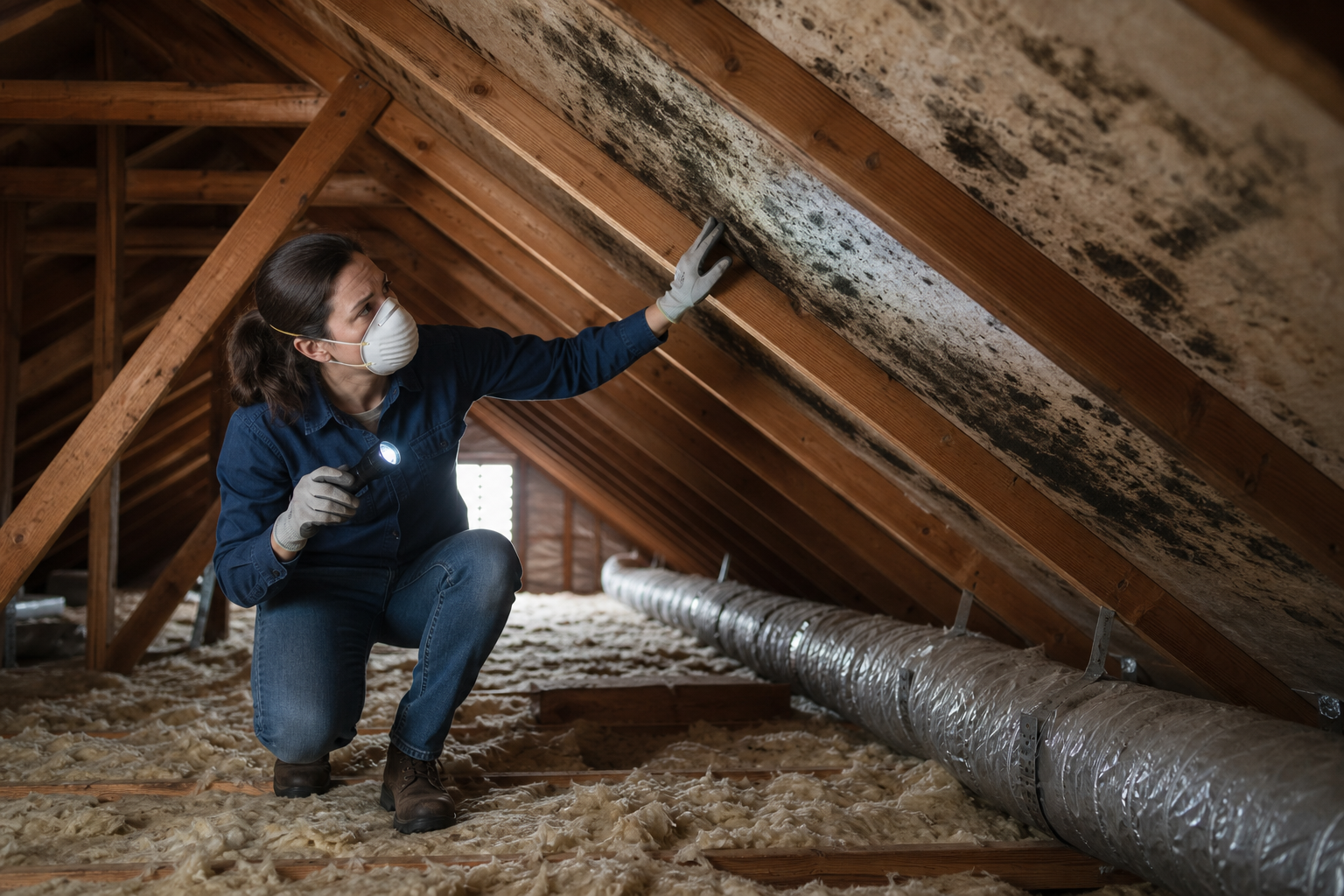
Attic mold signs are observable clues that fungal growth or prolonged moisture problems exist in the roof space above your living areas. They include smells, visible staining, wet or compressed insulation, condensation or frost on the roof deck, damaged wood framing, and ceiling paint changes. These signs matter because attic mold can indicate ongoing water intrusion or ventilation failure that threatens indoor air quality, structural components, and the resale value of a home. Early detection reduces repair scope and cost while lowering the chance of occupant exposure to mouldy conditions attic mold and Verified Remediation.
Quick, prioritized diagnostic checklist of attic mold signs
Below are six priority signs to check in the order most likely to appear and most useful for triage. For each sign you will find a short explanation, why it matters, and a practical next step.
Musty or earthy odour in upper-floor rooms
What you will notice: A persistent, stale, musty or earthy smell in bedrooms, hallways or near the attic hatch even when surfaces look clean. Homeowners often detect this before seeing any visible growth attic mold.
- Why it matters: Odour is a common early warning sign of active mould growth or trapped moisture and can mean spores are moving through ceiling cavities into living spaces.
- What to do next: Open the attic hatch and inspect the attic for damp insulation or staining. If the smell persists or you cannot find the source, request a professional inspection to locate hidden growth and moisture pathways.
Dark staining on roof sheathing or the underside of plywood
What you will notice: Dark grey, brown or black patches on roof sheathing or plywood visible from the attic. This visual cue is one of the most common signs of attic mold on roof boards Verified Remediation.
- Why it matters: Staining usually indicates repeated wetting and drying of the roof deck or persistent condensation, which allows mould to establish and spread along timber and plywood surfaces.
- What to do next: Photograph the staining, avoid disturbing it, and schedule a moisture assessment. A professional can test whether the staining is active mold and locate the source of moisture.
Wet, compressed or clumpy insulation and standing moisture
What you will notice: Insulation that is matted, darker than surrounding areas, or wet to the touch. Pooled water or ongoing damp spots indicate roof leaks or ventilation failure U.S. Department of Energy and attic mold.
- Why it matters: Saturated insulation cannot dry and becomes a breeding ground for mould. Wet insulation also reduces thermal performance and allows structural materials to remain damp.
- What to do next: Do not compress or stir wet insulation. If you find wet insulation, treat the situation as urgent and get a professional moisture assessment to find the leak and to determine whether insulation replacement is needed.
Condensation or frost on the underside of the roof deck
What you will notice: In cold weather, thin ice crystals, frost, or beads of condensation on the underside of roof sheathing or rafters. This pattern suggests warm, humid air is reaching cold surfaces and condensing there Wright Restorations and U.S. Department of Energy.
- Why it matters: Repeated condensation causes wood to stay damp long enough for mould to take hold and for rot to develop during freeze thaw cycles.
- What to do next: Improve attic ventilation and check for air leaks from the living space such as gaps around light fixtures, recessed cans, or attic hatches. If frost is widespread, contact a professional for a ventilation and air leakage diagnosis.
Warped, rotting or discoloured wood framing and fascia
What you will notice: Soft, splintering, or discoloured roof framing, rafters or fascia boards in the attic space. Warping or rot shows prolonged exposure to moisture rather than a single incident U.S. Department of Energy.
- Why it matters: Structural wood damage can weaken roof assembly connections and increase future repair costs. It also indicates the moisture problem is longstanding.
- What to do next: If you see structural wood damage, stop delay. Arrange a professional assessment to document the damage and plan both moisture control and structural repairs.
Peeling, bubbling or stained ceiling paint on upper-floor rooms
What you will notice: Interior ceiling paint that flakes, bubbles, or shows water stains directly below the attic. This often accompanies moisture migration from the attic into the ceiling plaster or drywall Wright Restorations and U.S. Department of Energy.
- Why it matters: Ceiling damage is evidence that moisture reaches living areas and that the problem is not confined to the attic. This increases urgency for repair to protect interior finishes and occupant health.
- What to do next: Photograph the ceiling damage and avoid painting over stains as a long term fix. Ask a professional to test for moisture and to inspect the attic for hidden mould and leaks.
How urgent each sign is and what to do first
Not all signs require identical response times, but several should prompt same-day action. Musty odour accompanied by wet insulation, visible dark staining, pooled water, or structural wood changes should be treated as urgent because they indicate active moisture and possible ongoing spread attic mold. Minor odour by itself or a single small stain can be monitored short term while you arrange a professional inspection. In all cases keep occupants away from heavily affected areas, avoid disturbing dusty or mouldy surfaces, and ventilate the home by opening windows when outdoor conditions permit.
When to call a professional and what a thorough inspection includes
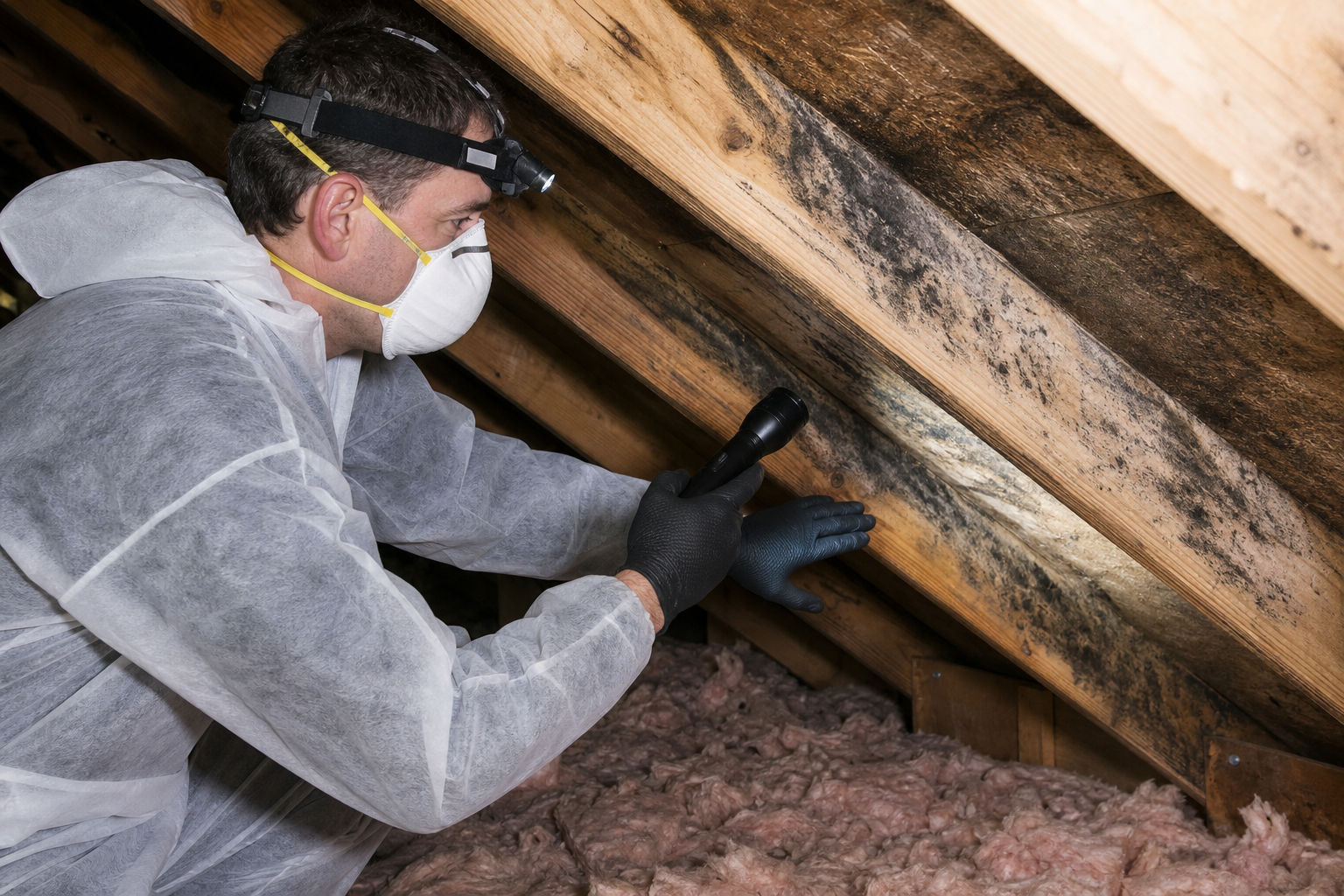
Call a certified mould professional when you see visible mould covering more than a small patch, find saturated insulation, discover structural wood damage, or when a musty odour persists despite basic checks. Professionals will provide a documented assessment and remediation plan that you can use for repairs or real estate transactions attic mold and Verified Remediation.
Typical professional checks: moisture assessment, thermal imaging and air testing
A full inspection commonly includes a moisture assessment with meters to measure moisture content in wood and insulation, thermal imaging to reveal hidden leaks or insulation gaps, and air or surface sampling to confirm whether mould is active. These methods locate hidden problems that a visual check can miss, and they form the basis for a clear remediation scope ASM Mold Removal and Verified Remediation.
Remediation methods professionals use: containment, HEPA filtration and eco-friendly treatments
When active mould is found, industry standard steps include containment to prevent spread, HEPA filtration to remove airborne spores, removal or treatment of contaminated materials, and the use of approved antimicrobial treatments. ASM Mold Removal describes these steps and offers a documented warranty after completion ASM Mold Removal.
Real objections and decision criteria homeowners use
Homeowners commonly worry about disruption, unexpected costs, safety of treatments, and proof of work. To compare contractors ask for a written scope that lists the inspection methods used, a clear estimate of line item costs, confirmation of insurance and certification, and the post-remediation documentation you will receive. If a contractor cannot explain containment strategies, HEPA usage, or disposal of contaminated materials, treat that as a concern. ASM offers free inspections and Ontario same-day response to help clarify scope before work begins ASM Mold Removal.
Documentation for real estate and aftercare you should expect

For buyers, sellers and agents the documentation you should request includes a detailed inspection report with moisture readings, thermal images or notes, photos of affected areas, a remediation plan, and a post-remediation clearance or warranty certificate. A Mold Remediation Warranty Certificate provides extra assurance that the treated area was inspected after work and meets the contractor's standard ASM Mold Removal and attic mold.
One-page printable checklist and next steps
Use this short checklist during a quick attic check or to brief an inspector.
- Smell test: Any persistent musty odour on upper floors?
- Visual check: Dark staining on roof sheathing visible from attic?
- Insulation: Is insulation wet, compressed or clumped?
- Condensation: Frost or droplets on underside of roof deck in cold weather?
- Structure: Any warped, soft or discoloured wood framing?
- Ceilings: Peeling, bubbling or stained paint on upper-floor ceilings?
- Immediate action: Photograph findings and schedule a professional moisture assessment if three or more items are positive.
To arrange a documented inspection with Ontario same-day response and a free moisture assessment, contact a local professional. ASM Mold Removal provides same-day response, HEPA containment, eco-friendly EPA approved treatments, and a Mold Remediation Warranty Certificate after work is completed ASM Mold Removal.
Frequently asked questions
How urgent are attic mold signs and which ones require same-day action?
Signs that require same-day action include wet or saturated insulation, visible dark staining that looks active, pooling water, and structural wood damage. Persistent musty odour with any of those signs also needs prompt attention because they indicate ongoing moisture and possible spread attic mold.
Can I inspect my attic myself and what should I look for safely?
Yes you can perform an initial check by opening the attic hatch, using a flashlight, and looking for the six checklist items above. Wear gloves, a fitted mask rated N95 or higher, and avoid disturbing dusty or mouldy insulation. If you find wet insulation or widespread staining, stop and call a professional for testing and containment Verified Remediation.
What will a professional attic mold inspection include and will I get documentation?
A professional inspection typically includes moisture measurements, thermal imaging, and possibly air or surface sampling. You should receive a written report with moisture readings, photographs, and a recommended remediation plan. Many contractors provide a post-remediation certificate or warranty after clearance ASM Mold Removal.
Will mold remediation disrupt my home and how can I compare contractor quotes?
Some disruption is common when removal requires containment or insulation replacement, but effective contractors minimise disruption with clear containment and scheduling. Compare quotes by asking for a written scope, line item costs, containment steps, cleanup plans, and post-work documentation. If possible get references and proof of insurance before hiring.
How can I reduce the chance of attic mold returning after remediation?
Control the root causes by repairing roof leaks, improving attic ventilation, sealing air leaks from the living space, replacing wet insulation, and maintaining attic humidity below levels that promote mould. A professional can recommend the specific fixes your attic needs after a moisture assessment U.S. Department of Energy.
For an Ontario same-day inspection, free moisture assessment, and documented remediation with HEPA containment and a Mold Remediation Warranty Certificate, contact Asmmoldremoval or call 647-451-0493.


